
The African Violet Bible: Blooms All Year Round
Master the delicate art of African Violet care. Learn the secrets to consistent blooming, proper bottom-watering, and propagation.
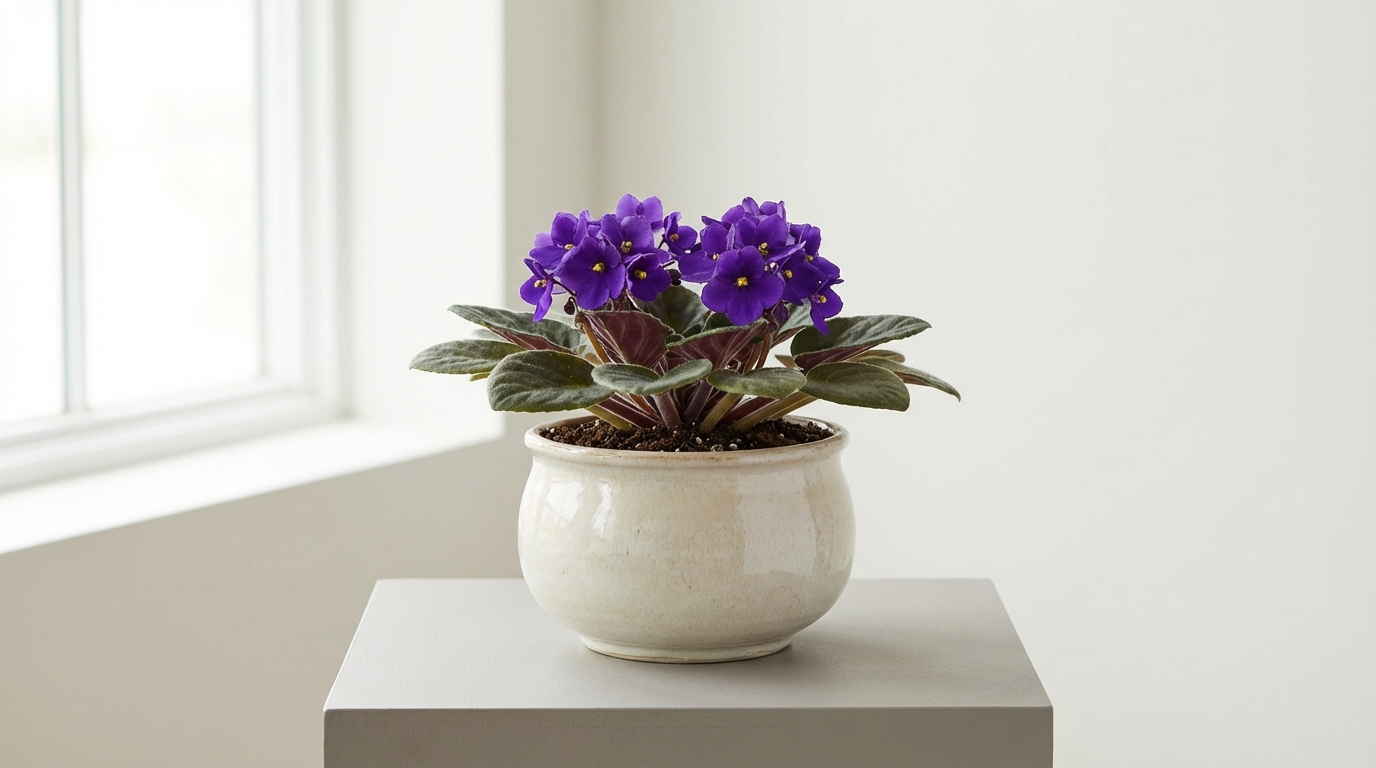
African Violets: The Queen of Indoor Blooms
Saintpaulia, more commonly known as African Violets, are the crown jewels of the windowsill garden. Native to the cloud forests of Tanzania and Kenya, these compact plants are beloved for their velvety foliage and their incredible ability to bloom nearly year-round when given the right conditions.
While they have a reputation for being “finicky,” African Violet care is actually quite simple once you understand their unique preference for light, water, and temperature.
1. Light: The Key to Constant Flowering
If your African Violet has lush leaves but no flowers, it is almost certainly a lighting issue.
- The Sweet Spot: Bright, indirect light is essential. An East-facing window is usually the best location.
- The Hand Test: Hold your hand between the light source and the plant. You should see a soft, faint shadow. If the shadow is sharp, the light is too intense.
- Rotation: These plants are highly phototropic. Rotate the pot a quarter-turn every week to maintain a symmetrical “rosette” shape.
- Artificial Light: They thrive under fluorescent or LED grow lights (12-14 hours a day), making them perfect for office environments.
2. The Art of Watering
African Violets are notoriously sensitive to water on their leaves, which can cause permanent spotting and rot.
- Bottom Watering (Recommended): Set the pot in a bowl of room-temperature water for 15-20 minutes until the top of the soil feels slightly moist. Never let the plant sit in water for more than 30 minutes.
- Water Temperature: Always use lukewarm water. Cold water can “shock” the roots and cause leaf spots.
- Frequency: Wait until the soil surface feels dry to the touch. The pot should feel light when lifted.
3. Soil and Potting
African Violets have very delicate, shallow root systems that need plenty of air.
- The Mix: Use a specialized African Violet potting mix (usually 1/3 peat, 1/3 perlite, and 1/3 vermiculite). It must be light and porous.
- Pot Size: These plants love to be slightly root-bound. The general rule is that the pot diameter should be 1/3 the diameter of the leaf span. A plant that is 9 inches across belongs in a 3-inch pot.
- Drainage: Never use a pot without drainage holes.
4. Temperature and Humidity
If you are comfortable, your African Violet is likely comfortable.
- Temperature: Ideal range is 65°F to 75°F (18°C–24°C). Avoid drafty windows or AC vents.
- Humidity: They enjoy 50-60% humidity. You can increase humidity by using a pebble tray filled with water, ensuring the pot sits above the water line on the stones.
5. Grooming for Success
- Deadheading: Remove spent blooms immediately to encourage the plant to produce new flower stalks.
- Removing Old Leaves: Occasionally, the bottom row of leaves will turn yellow or limp. Snip them off at the base of the “neck” to keep the plant’s energy focused on new growth.
- Dusting: Use a soft-bristled paintbrush to gently brush dust off the fuzzy leaves. Never use water to clean the leaves.
6. Propagation: The Leaf Cutting
African Violets are one of the most rewarding plants to propagate.
- Select a Leaf: Choose a healthy, firm leaf from the middle row of the plant.
- The Cut: Cut the stem (petiole) at a 45-degree angle, leaving about 1 inch of stem.
- Planting: Insert the stem into a small pot of moist perlite or seed-starting mix.
- Tenting: Place the pot in a clear plastic bag to create a mini-greenhouse.
- The Wait: In 4-8 weeks, tiny “mouse ear” leaves will emerge from the base of the mother leaf.
Troubleshooting Guide
- No Blooms: Increase light exposure or check if you are using a high-phosphorus “Bloom Booster” fertilizer.
- Mushy Brown Centers: Crown rot, usually from water sitting in the center of the plant.
- Small, Brittle Leaves: Can indicate too much light or a fertilizer salt buildup.
- Leggy “Neck”: As lower leaves are removed over time, a bare stem may form. During your next repot, simply bury the neck up to the bottom row of leaves.
Quick Pro Tip
Use specialized fertilizer. Look for a balanced 14-12-14 or 20-20-20 fertilizer specifically formulated for African Violets. Apply at 1/4 strength every time you water for consistent, heavy blooming.