Alocasia: Mastering the Elephant Ear
Master the care of the dramatic Alocasia. From lighting requirements to its unique dormancy period, learn how to keep this tropical giant thriving.
Alocasia: The Tropical Statement
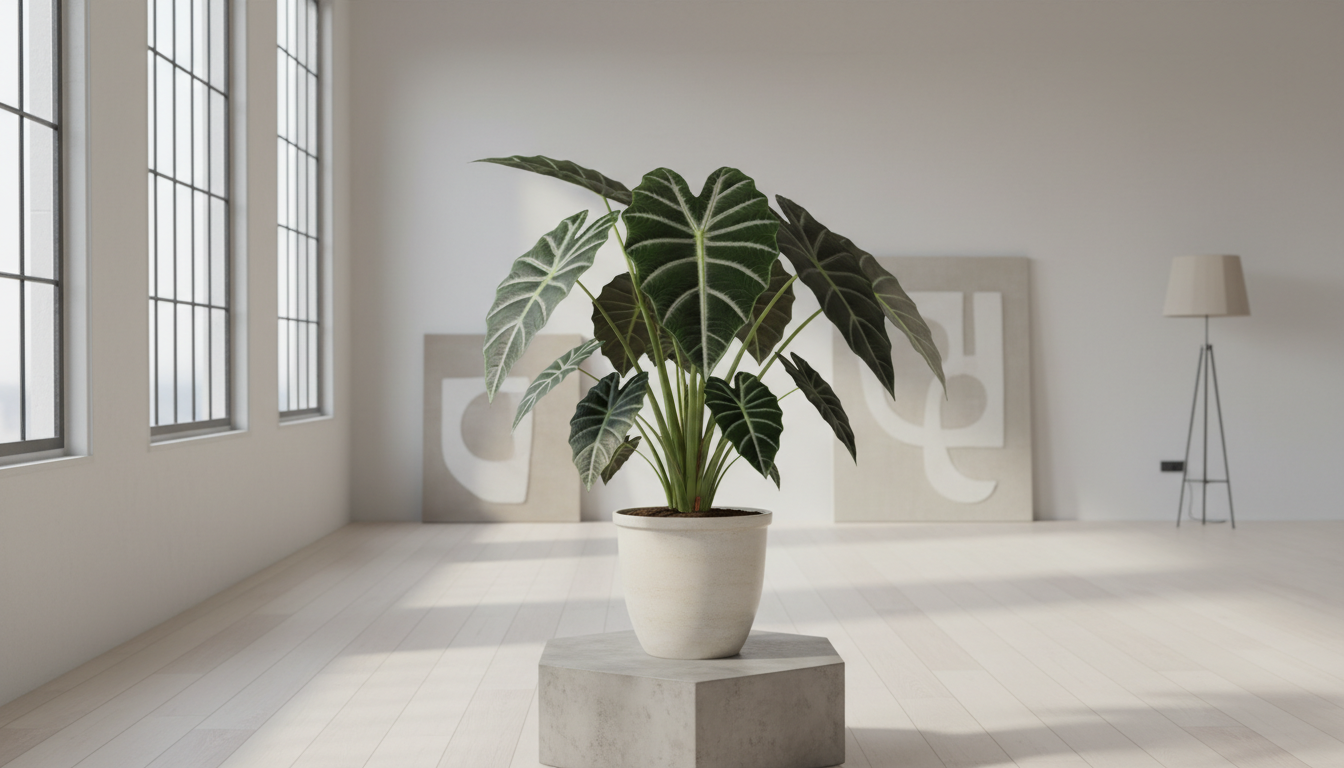
Alocasia, often called “Elephant Ears” due to their massive, heart-shaped leaves, are the ultimate statement plants. Native to the subtropical and tropical regions of Asia and Eastern Australia, they are prized for their dramatic foliage, prominent veins, and architectural stems.
While they have a reputation for being slightly demanding, understanding their tropical roots is the key to a flourishing Alocasia.
1. Quick Facts
- Difficulty: Moderate to Difficult
- Light: Bright Indirect Light
- Water: Moderate (Keep soil moist but not soggy)
- Pet Safety: Toxic to cats and dogs (Contains calcium oxalate crystals)
2. Light: The Tropical Canopy
Alocasias thrive in bright, filtered light that mimics the forest floor.
- Ideal: Bright, indirect light near a North or East-facing window.
- Too Intense: Direct afternoon sun will quickly bleach or scorch the large, delicate leaves.
- Rotation: These plants are highly phototropic. Rotate the pot a quarter-turn every week to ensure even growth.
3. Watering & Humidity
Humidity is arguably the most critical factor for an Alocasia’s success.
- Watering Routine: Allow the top 1-2 inches of soil to dry out before watering again. They prefer to stay consistently moist, but they are very sensitive to “wet feet” (standing water in the soil).
- Signs of Overwatering: Yellowing leaves and soft stems are the #1 indicator of root or stem rot.
- Humidity: Aim for 60% humidity or higher. If your air is dry, use a humidifier, pebble tray, or group your Alocasia with other plants.
4. Understanding Dormancy
It’s important to know that Alocasias can go dormant in the winter or under stress.
- The Signal: The plant may stop growing or even lose all its leaves.
- What to Do: Don’t throw it away! Reduce watering and keep the bulb (rhizome) in a warm, dry place. It will typically sprout again in the spring once the light and temperature increase.
5. Soil & Fertilizer
- The Mix: Use a loose, well-draining mix. A blend of high-quality potting soil, orchid bark, and perlite is excellent.
- Feeding: They are heavy feeders during the growing season. Apply a balanced liquid fertilizer at half-strength every 2-4 weeks.
6. Common Problems
- Spider Mites: These are the #1 pest for Alocasias. Wipe the large leaves regularly with a damp cloth and keep humidity high to prevent infestations.
- Dripping Leaves: This is called guttation. It’s the plant’s way of releasing excess water and is usually a sign that your soil is slightly too moist.
Quick Pro Tip
Wipe the leaves. The massive leaves are dust magnets. Keeping them clean ensures the plant can photosynthesize effectively and allows you to check for early signs of pests.