The Brown Leaf Decoder: What Your Plant is Trying to Tell You
Don't panic! Learn how to identify the cause of brown leaves—from crispy tips to soggy spots—and how to nurse your plants back to health.
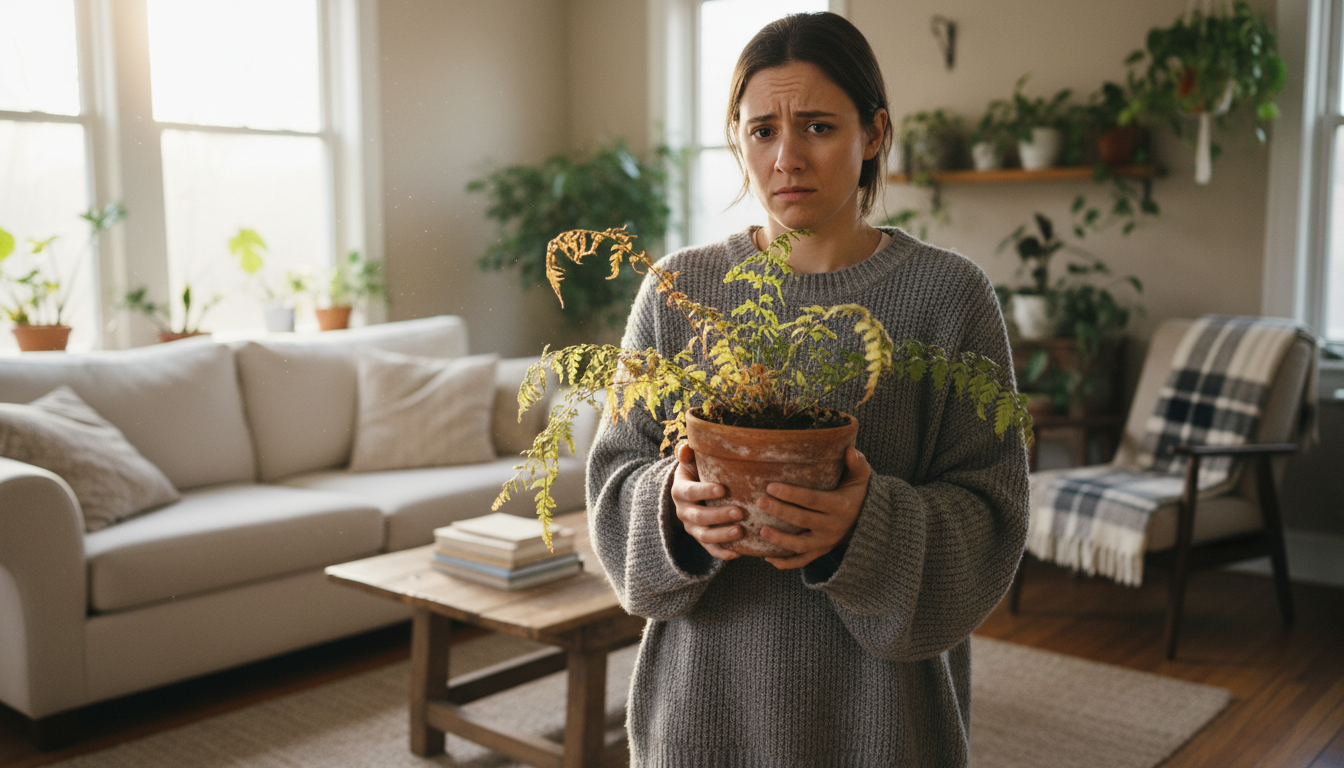
Finding a brown leaf on your favorite plant can feel like a personal failure, but here’s the truth: it happens to everyone. Even the most experienced plant parents deal with browning.
Think of brown leaves as your plant’s way of sending you a text message. It’s saying, “Hey, something isn’t quite right in my environment.” To fix the problem, you first need to decode the message. The way the leaf turns brown tells you exactly what’s wrong.
1. Crispy, Brown Tips
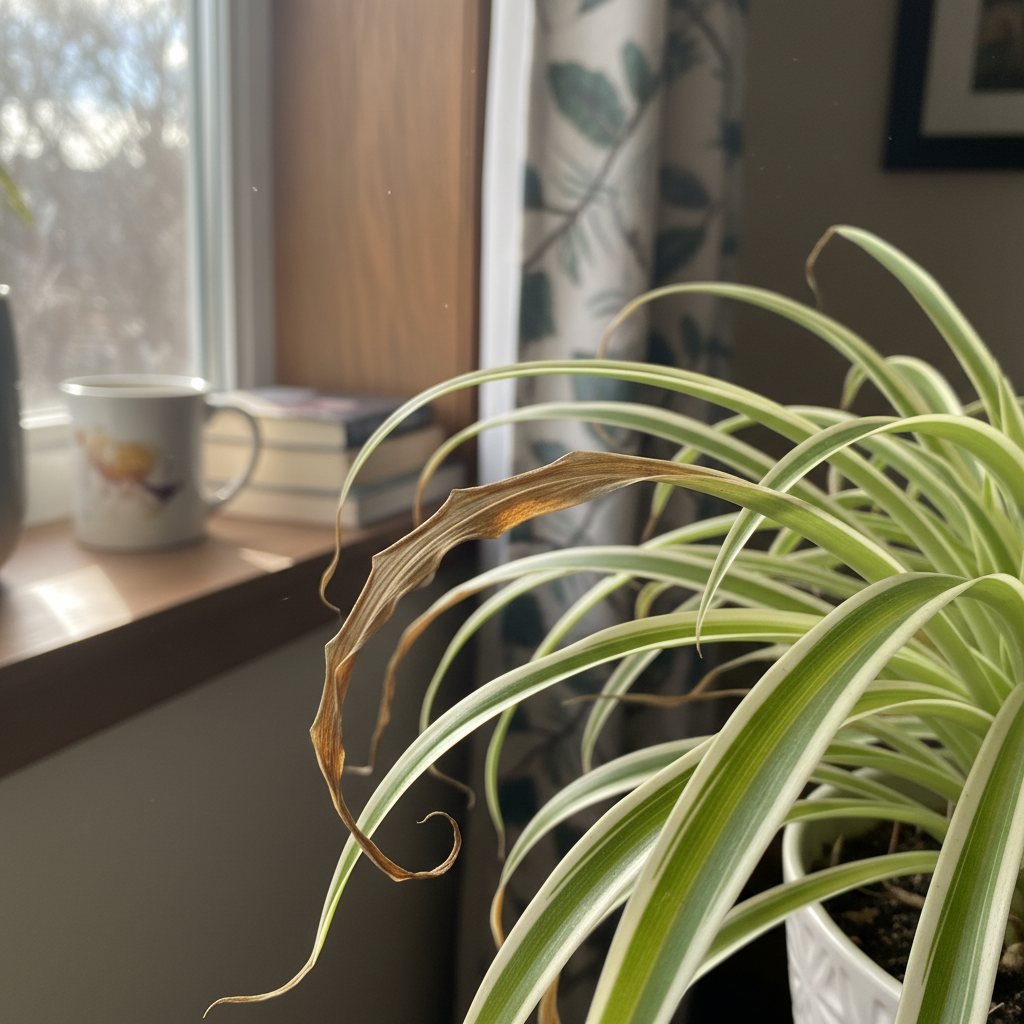
The Look: Only the very tips of the leaves are brown and crunchy. The rest of the leaf usually looks green and healthy.
Common Causes:
- Low Humidity: This is the #1 cause for tropical plants like Spider Plants or Ferns. The air is too dry, and the moisture evaporates from the tips faster than the plant can pull it from the roots.
- Tap Water Sensitivity: Many plants are sensitive to chlorine, fluoride, and salts in tap water. These minerals accumulate at the tips, “burning” the tissue.
The Treatment:
- Boost Humidity: Group plants together, use a pebble tray, or run a humidifier.
- Change Your Water: Use distilled water, rainwater, or let your tap water sit out for 24 hours before watering to let the chemicals dissipate.
2. Dry, Crispy Leaf Edges
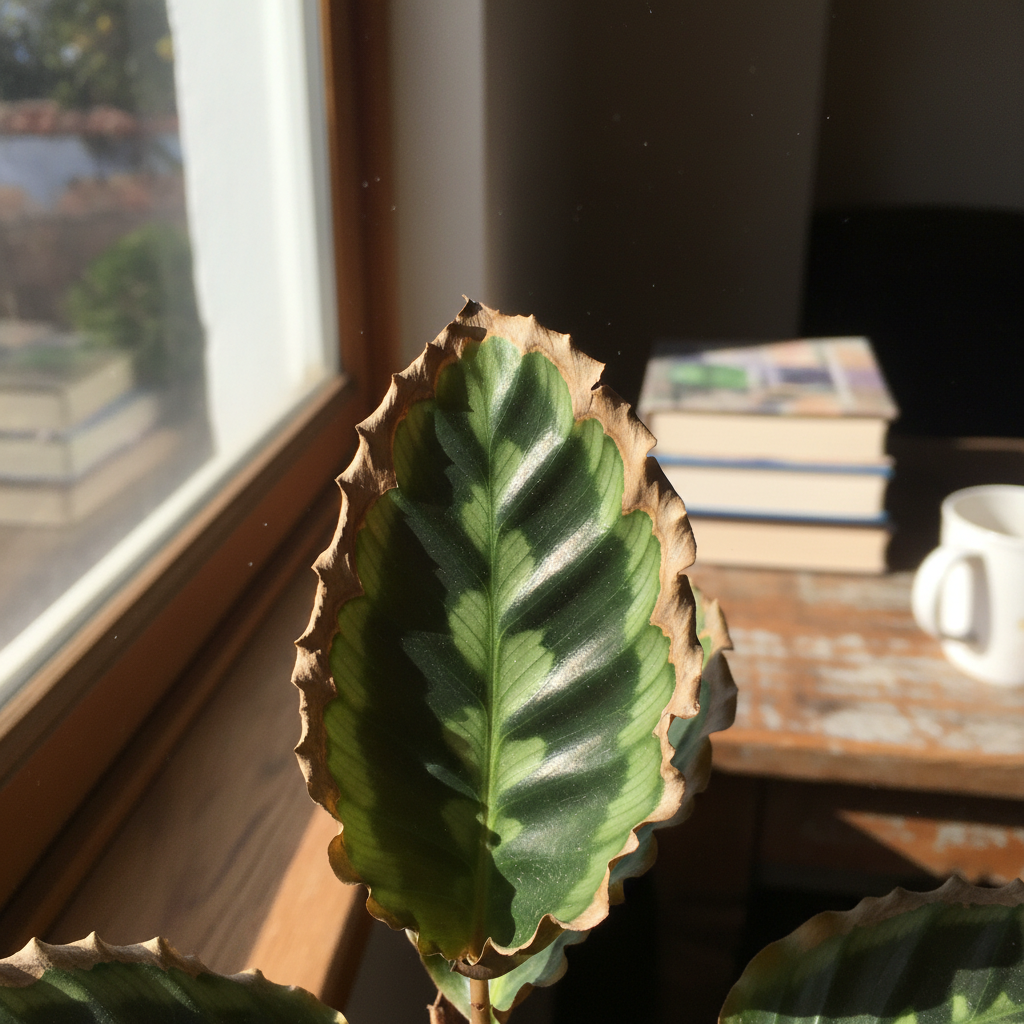
The Look: The outer edges of the leaves are turning brown, curling, and feel like paper.
Common Causes:
- Underwatering: The plant is consistently staying dry for too long.
- Soil Repellency: If the soil has become so dry that it has pulled away from the edges of the pot, water might just be running down the sides without actually soaking the roots.
The Treatment:
- The Bottom Soak: Place the pot in a sink or basin filled with 2-3 inches of water. Let it sit for 30 minutes until the top of the soil feels moist. This ensures the entire root ball is hydrated.
- Consistent Schedule: Set a reminder to check your plants every few days rather than waiting for them to wilt.
3. Dark, Mushy Brown Spots
The Look: Soft, dark brown or black spots, often in the middle of the leaf. They may have a yellow “halo” around them.
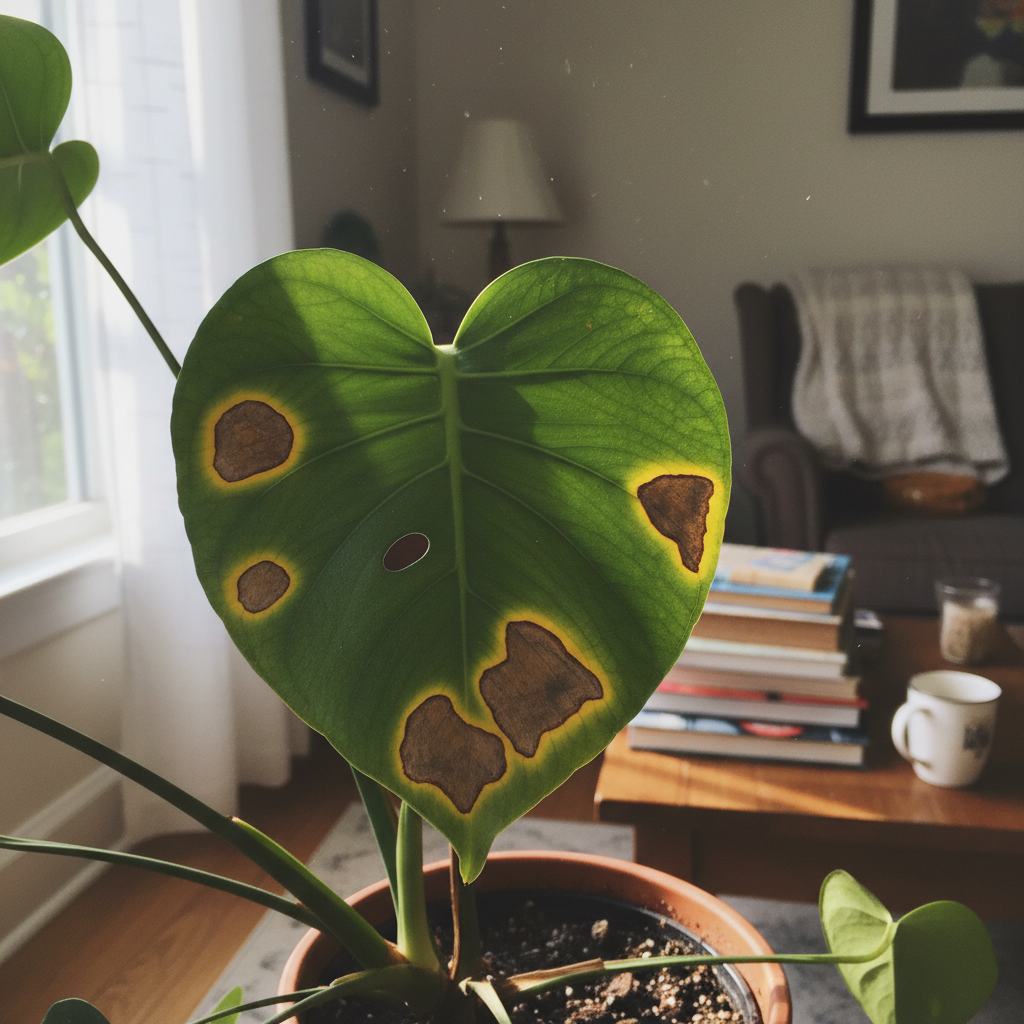
Common Causes:
- Overwatering (Root Rot): The roots are suffocating in stagnant water, and the rot is manifesting as fungal spots on the leaves.
- Bacterial/Fungal Infection: Water sitting on the leaves in a room with poor airflow can lead to leaf spot diseases.
The Treatment:
- Check the Roots: If the soil is soaking wet, gently pull the plant out. If the roots are black and slimy instead of white/tan and firm, you have rot. Trim the rot and repot in fresh, dry soil.
- Improve Airflow: Use a small fan or open a window to keep air moving around your plants.
4. Entire Leaf Turning Brown
The Look: A single leaf (often at the bottom) slowly turns yellow, then brown, and eventually falls off.
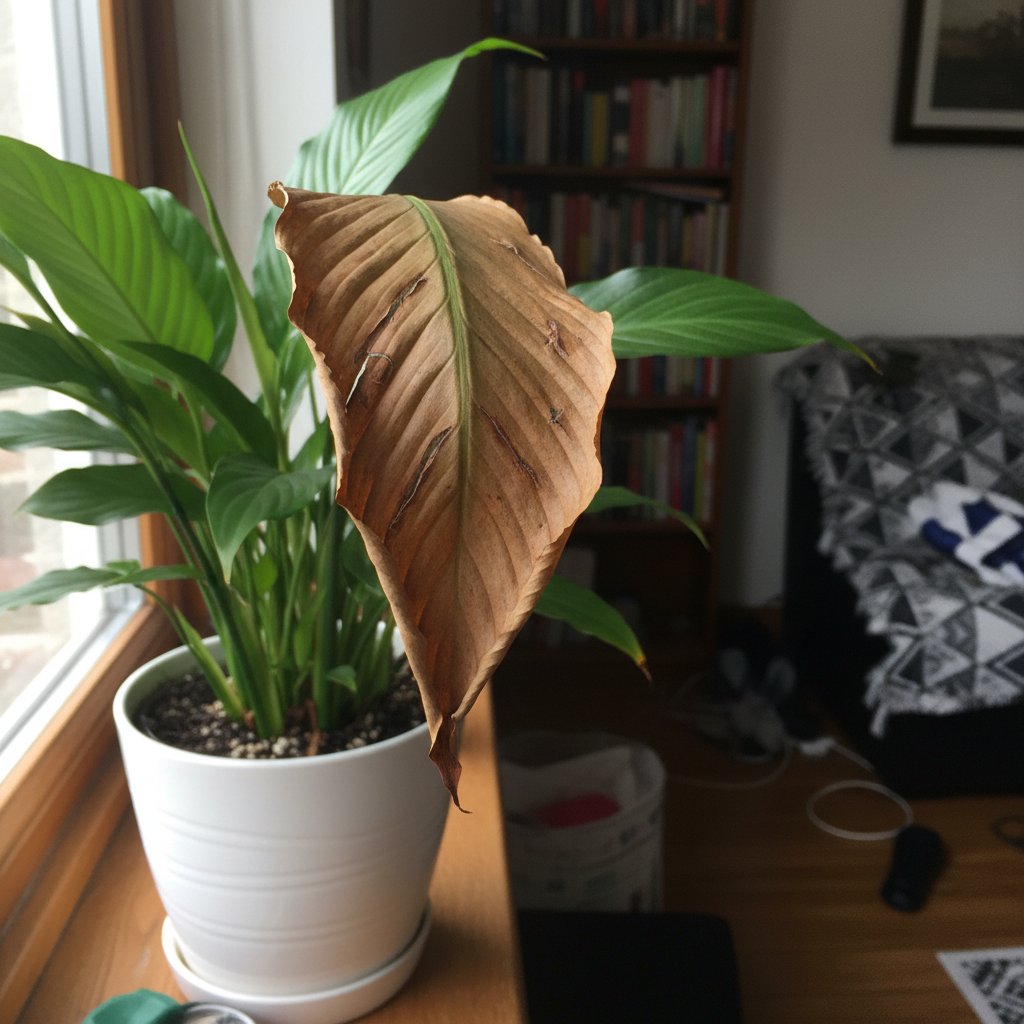
Common Causes:
- Natural Aging: If it’s just one or two leaves at the bottom of the plant, don’t worry! This is normal. The plant is just shedding old growth to focus energy on the new stuff.
- Extreme Stress: If many leaves turn brown at once, it could be a sudden temperature drop or a severe lack of light.
The Treatment:
- Patience: If it’s natural aging, simply snip the leaf off at the base with clean shears.
- Check Placement: Ensure the plant isn’t in the direct line of an AC vent or a drafty door.
To Snip or Not to Snip?
Should you cut the brown parts off?
- For Aesthetic Reasons: Yes, you can trim brown tips off. Follow the natural shape of the leaf and leave a tiny sliver of brown so you don’t cut into the “living” green tissue, which can cause more browning.
- For Health Reasons: If the leaf is more than 50% brown, it’s no longer helping the plant photosynthesize. It’s better to remove the entire leaf so the plant doesn’t waste energy trying to save it.
Quick Pro Tip
Get a Moisture Meter. If you struggle to tell if a plant needs water, a $10 moisture meter is a game-changer. It takes the guesswork out of watering and prevents both the “crispy tips” of underwatering and the “mushy spots” of overwatering.