The Air Plant Masterclass: Tillandsia Care
Everything you need to know about growing plants that don't need soil. Master the soak, the dry, and the light.
Tillandsia: Life Without Soil
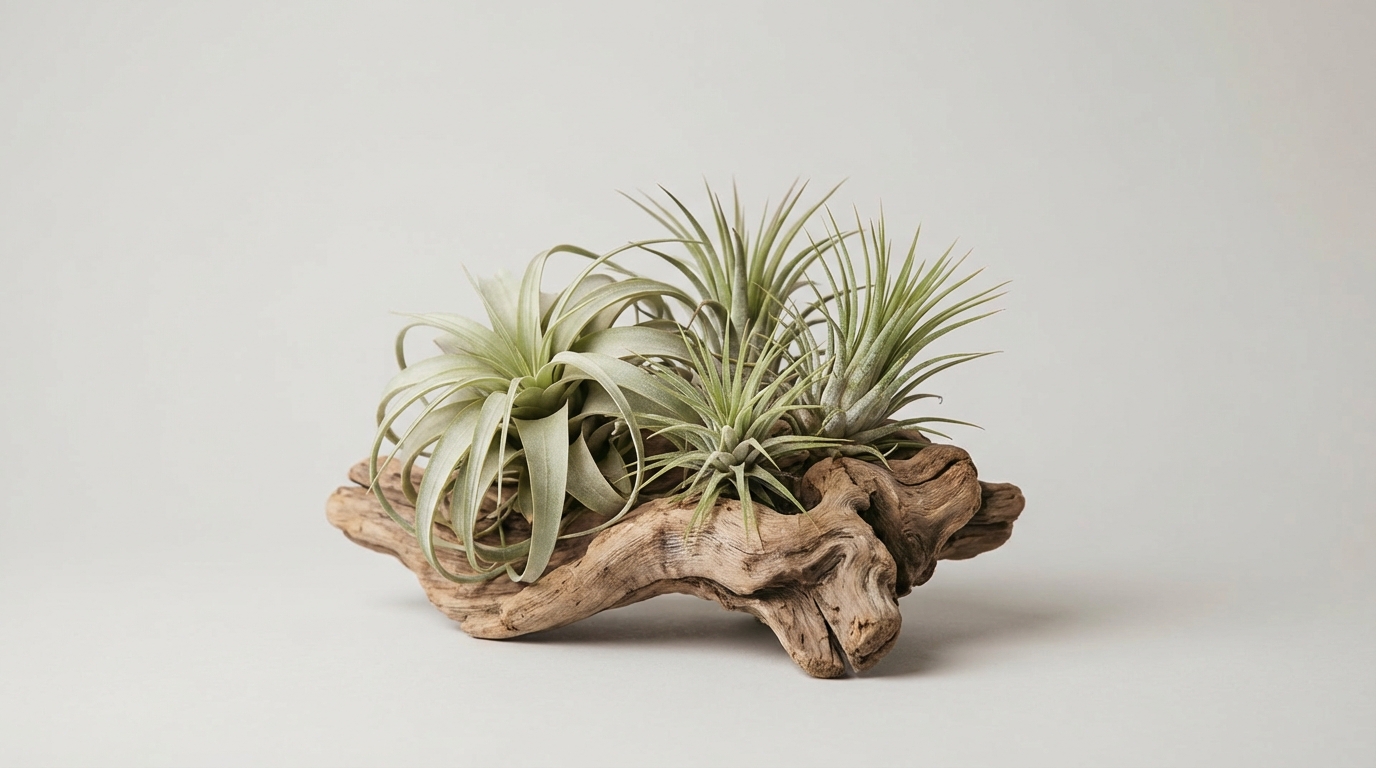
Tillandsia, commonly known as “Air Plants,” are among the most fascinating members of the botanical world. As epiphytes, they grow on other plants or structures in the wild, absorbing water and nutrients entirely through their leaves via specialized cells called trichomes.
Because they don’t require soil, they offer nearly endless possibilities for home decor—from glass terrariums to driftwood mounts. However, “low maintenance” doesn’t mean “no maintenance.”
1. The Golden Rule: Air & Water
The most common mistake with Air Plants is treating them like desert cacti. They are tropical plants that need regular hydration.
The Watering Routine
- The Weekly Soak: Once a week, submerge your plants in a bowl of room-temperature water for 20-30 minutes.
- The Shake & Dry: This is the most critical step. After soaking, gently shake the excess water off your plants and place them upside down on a towel in a well-ventilated spot.
- The Warning: If water remains trapped in the “cup” or base of the plant, it will rot from the inside out within days. Ensure they are bone-dry within 4 hours.
- Misting: In very dry environments, you can mist your plants 2-3 times a week between soaks.
2. Light: Bright but Screened
In nature, Tillandsia often grow under the canopy of larger trees.
- Ideal: Bright, indirect sunlight. A spot near a North or East-facing window is perfect.
- Too Much: Direct midday sun will quickly dehydrate and “bleach” the plant.
- Too Little: If the leaves look dull and the plant isn’t growing or blooming, it likely needs more light.
3. Understanding Trichomes (The “Fuzz”)
Have you noticed the silvery, fuzzy scales on your Air Plant? Those are trichomes.
- Xeric (Silvery/Fuzzy): These species (like T. xerographica) come from drier climates. They have more trichomes to trap moisture and reflect intense sun. They can handle slightly more light and less frequent watering.
- Mesic (Green/Smooth): These species come from humid rainforests. They have fewer trichomes and require more frequent watering and higher humidity.
4. Air Circulation
As the name suggests, “Air” plants need air!
- Avoid keeping them in enclosed containers or deep glass globes for long periods without airflow.
- Stagnant, humid air is a recipe for fungal infections.
5. Blooming & Pups
Tillandsia typically bloom only once in their lifetime. But don’t worry, the end of a bloom is the beginning of a new generation.
- The Bloom: When an Air Plant is happy, it will produce a “spike” with vibrant flowers.
- The Pups: After blooming, the mother plant will slowly stop growing and put her energy into producing “pups” (offsets) at the base.
- The Lifecycle: You can gently separate the pups when they are about 1/3 the size of the mother, or leave them to form a large, beautiful “clump.”
6. Feeding
While not strictly necessary, feeding your plants will result in faster growth and more frequent blooms.
- Method: Use a specialized Bromeliad or Air Plant fertilizer (low in copper and urea) added to your soak water once a month during the Spring and Summer.
Troubleshooting Guide
- Curling Leaves: The plant is thirsty. Increase soak time.
- Brown/Crispy Tips: Low humidity or underwatering.
- Black/Slimy Base: Rot. The plant was likely not dried properly after watering. Unfortunately, rot is usually fatal.
- Falling Apart: If the center leaves pull out easily, the plant has already rotted.
Quick Pro Tip
Use Rainwater or Pond Water. Tillandsia are sensitive to the chlorine and fluoride in tap water. If you must use tap water, let it sit out for 24 hours to allow the chemicals to dissipate before soaking your plants.