Aglaonema pictum 'Tricolor'
Aglaonema pictum var. tricolor
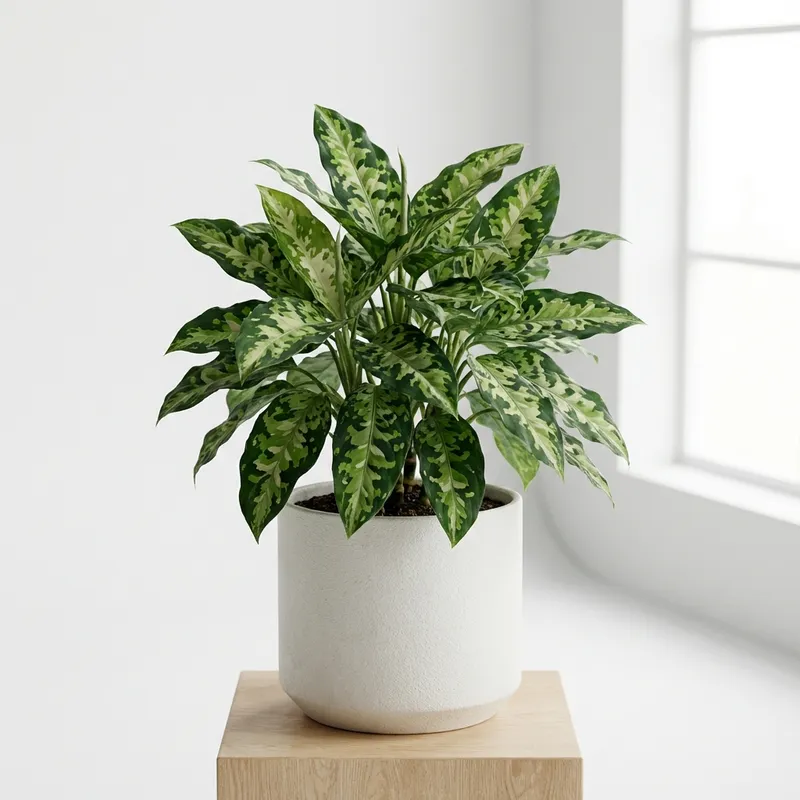
Widely known as the 'Camouflage Plant,' the Aglaonema pictum 'Tricolor' is a rare and striking tropical perennial. Its most distinctive feature is its velvet-textured foliage, which displays a mesmerizing mosaic of three distinct colors: deep forest green, bright lime, and creamy white. This unique patterning resembles military camouflage, making it one of the most aesthetically unusual and sought-after plants in the aroid world. Native to the rainforests of Sumatra, it grows as a small shrub and brings a sophisticated, artistic flair to indoor collections.
Light
Bright Indirect
Water
Moderate
Difficulty
Moderate
Humidity
High
Pet Warning
Contains insoluble calcium oxalate crystals. If ingested, it can cause severe mouth irritation, swelling of the throat, and digestive upset in cats, dogs, and humans.
Care Guide
Care Guide for Aglaonema pictum 'Tricolor'
Lighting
Position your plant in a location that receives bright, filtered light. Avoid direct sunlight at all costs, as the leaves are thin and prone to scorching. If light is too low, the plant will grow leggy and lose its iconic camouflage variegation.
Watering
Water when the top 1-2 inches of soil feel dry. This plant prefers consistent moisture but is highly susceptible to root rot if left in standing water. Ensure your pot has excellent drainage. Reduce watering significantly during the winter months.
Humidity and Temperature
This species is native to tropical jungles and requires high humidity (65% or higher) to thrive. Use a humidifier or a pebble tray to maintain moisture levels. It prefers warm temperatures between 65°F and 85°F (18°C - 29°C). Keep it away from cold drafts and air conditioning vents, as it is very sensitive to temperature fluctuations.
Soil
Use a well-aerated, chunky aroid mix. A combination of potting soil, perlite, orchid bark, and charcoal works best to provide the drainage and aeration the roots require.
Common Issues
- Brown leaf tips: Often a sign of low humidity or mineral buildup from tap water. Try using distilled or rainwater.
- Drooping leaves: Usually indicates the plant is thirsty or has been exposed to a cold draft.
- Slow growth: This is a naturally slow-growing plant; do not over-fertilize to speed it up, as this can burn the roots.
In-Depth Care & Growth
Feeding & Soil
Fertilizer
Balanced liquid fertilizer (10-10-10 or 20-20-20)
Soil
Rich, well-draining aroid mix with orchid bark and perlite.
Physical Attributes
Mature Size
12 to 24 inches in height
Growth Rate
Slow
Propagation
Stem cuttings (in water or moss) and division of the root ball.