Alocasia
Alocasia spp.
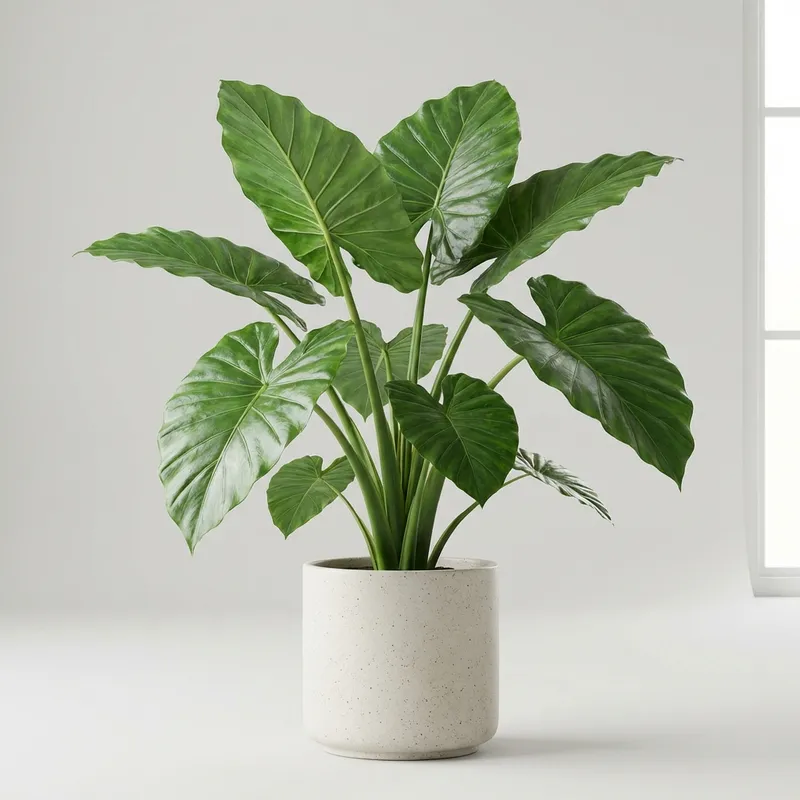
Known as Elephant Ear plants, Alocasias are stunning tropical perennials characterized by their large, heart-shaped or arrowhead-shaped leaves with prominent veining. They are prized for their dramatic foliage and architectural presence in interior spaces.
Light
Bright Indirect
Water
Moderate
Difficulty
Moderate
Humidity
High
Pet Warning
Contains calcium oxalate crystals which are toxic to cats, dogs, and humans if ingested, causing oral irritation and swelling.
Care Guide
Alocasia Care Guide
Light
Alocasias thrive in bright, indirect light. Direct sunlight can scorch the leaves, while too little light can lead to leggy growth and smaller leaves.
Water
Keep the soil consistently moist but not soggy. Allow the top inch of soil to dry out between waterings. In winter, reduce watering as the plant enters dormancy.
Humidity
These plants love high humidity (above 60%). Use a humidifier, pebble tray, or group plants together to maintain moisture levels.
Temperature
Maintain temperatures between 65°F and 85°F (18°C-29°C). Avoid cold drafts and sudden temperature fluctuations.
Common Issues
Watch out for spider mites and root rot. Yellowing leaves can indicate overwatering or underwatering.
Seasonal Tips
Alocasias may go dormant in winter, losing many leaves. Don't panic; reduce water and keep in a warm spot until spring.
In-Depth Care & Growth
Feeding & Soil
Fertilizer
Balanced liquid fertilizer or nitrogen-rich formula
Soil
Well-draining, aerated potting mix containing peat, perlite, and pine bark.
Physical Attributes
Mature Size
2 to 6 feet tall depending on variety
Growth Rate
Fast
Propagation
Division of rhizomes or separation of corms.