Alocasia (Elephant Ear)
Alocasia spp.
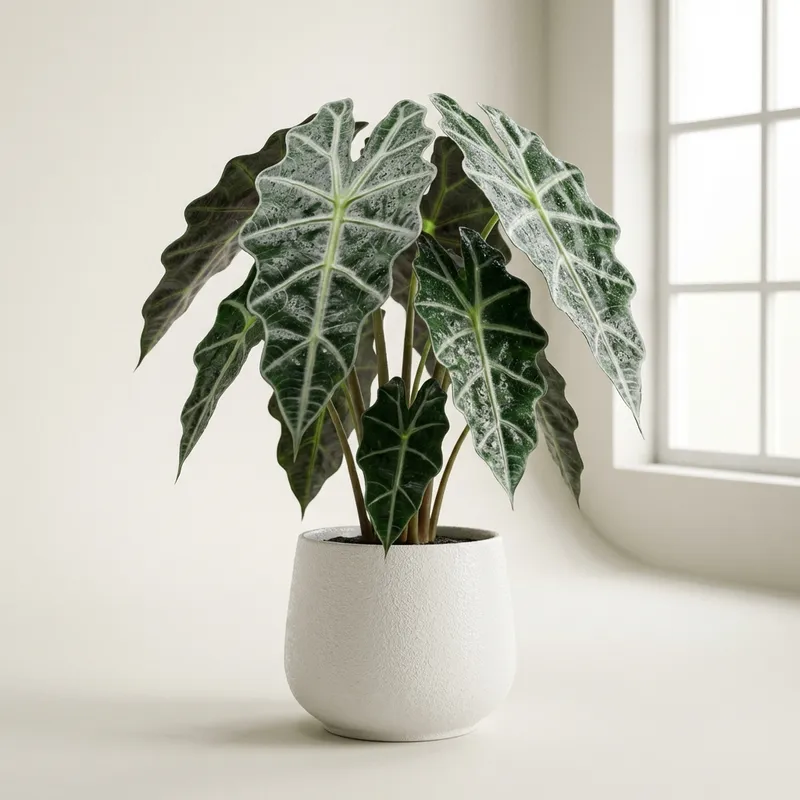
Known for their dramatic, large heart-shaped or arrowhead-shaped foliage, Alocasias are stunning tropical perennials that add an architectural flair to indoor spaces. Often referred to as Elephant Ears, their leaves can feature striking veining, velvety textures, or glossy finishes that range from vibrant green to deep purple-black.
Light
Bright Indirect
Water
High
Difficulty
Moderate
Humidity
High
Pet Warning
Contains calcium oxalate crystals which cause immediate oral pain, swelling of the mouth and throat, and digestive upset if ingested by pets or humans.
Care Guide
Alocasia Care Guide ### Light Alocasias thrive in bright, indirect light. Direct sunlight will scorch the delicate leaves, while low light can lead to stunted growth and drooping. ### Water These plants prefer to stay consistently moist but not soggy. Water when the top inch of soil feels dry. Ensure the pot has excellent drainage to prevent root rot. ### Humidity High humidity is essential. Maintain at least 60% humidity using a humidifier, pebble tray, or by grouping plants together. Dry air can cause crispy leaf edges. ### Temperature Keep your Alocasia in a warm environment between 65-80°F (18-27°C). Protect it from cold drafts and air conditioning vents. ### Seasonal Dormancy In winter, Alocasias often go dormant. They may stop growing or lose leaves. During this time, reduce watering and stop fertilizing until new growth appears in spring.
In-Depth Care & Growth
Feeding & Soil
Fertilizer
Balanced liquid fertilizer or high-nitrogen foliage boost
Soil
Well-draining, airy aroid mix containing orchid bark, perlite, and coco coir.
Physical Attributes
Mature Size
2 to 6 feet tall depending on variety
Growth Rate
Fast
Propagation
Division of rhizomes or by separating corms during repotting.