Amaryllis
Hippeastrum spp.
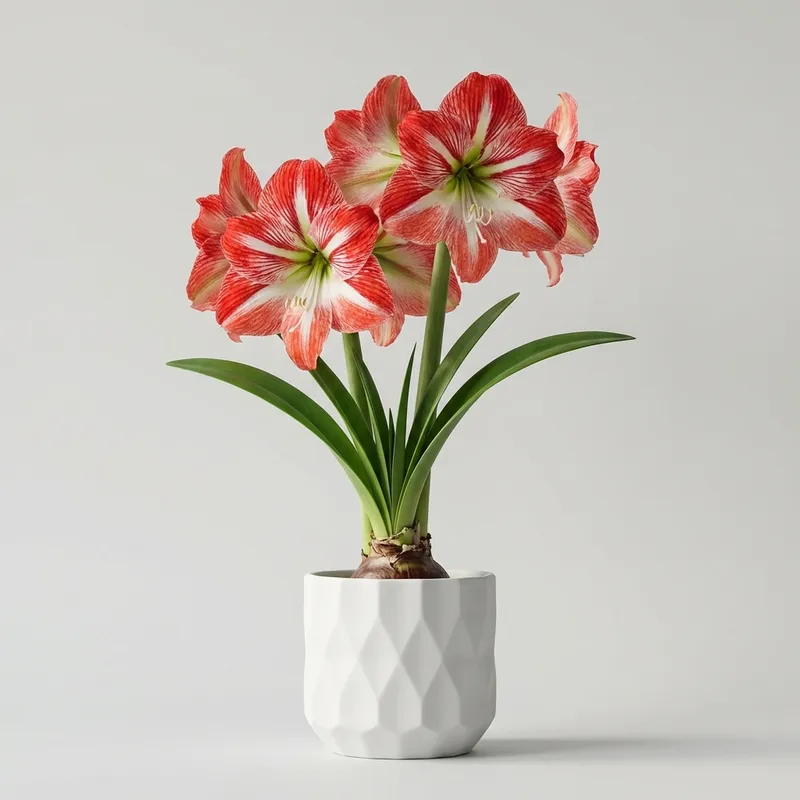
Known for its spectacular, trumpet-shaped blooms, the Hippeastrum is a popular winter-flowering bulb that brings vibrant color to indoor spaces. Often mislabeled as 'Amaryllis', these South American natives produce large, dramatic flowers atop tall, sturdy stalks, making them a stunning centerpiece during the holidays and beyond.
Light
Full Sun
Water
Moderate
Difficulty
Moderate
Humidity
Low
Pet Warning
Contains lycorine and other alkaloids. Highly toxic to cats and dogs, potentially causing vomiting, diarrhea, and tremors if bulbs or leaves are consumed.
Care Guide
Amaryllis Care Guide
Planting and Initial Care
Plant bulbs in a pot only slightly larger than the bulb itself, leaving the top third of the bulb exposed. Use a well-draining potting mix. Water sparingly until the first green sprout appears.
Blooming Phase
Once growth begins, move to a bright, warm spot. Increase watering as the stalk grows, keeping the soil moist but not soggy. Turn the pot regularly to prevent the stalk from leaning toward the light.
Post-Bloom Care
When flowers fade, cut the stalks 2 inches above the bulb but do not cut the leaves. The leaves are essential for gathering energy for the next bloom cycle. Continue watering and fertilizing as normal.
Dormancy Period
In late summer, stop watering and let the leaves die back naturally. Store the bulb in its pot in a cool, dark place (50-55°F) for 8-10 weeks. To restart growth, move to a warm, sunny spot and resume watering.
In-Depth Care & Growth
Feeding & Soil
Fertilizer
Balanced liquid fertilizer or high-phosphorus bloom booster
Soil
Rich, well-draining potting soil with perlite or coarse sand
Physical Attributes
Mature Size
12-24 inches tall
Growth Rate
Fast
Propagation
Division of bulb offsets (bulblets) or starting from seed