Anthurium
Anthurium andraeanum
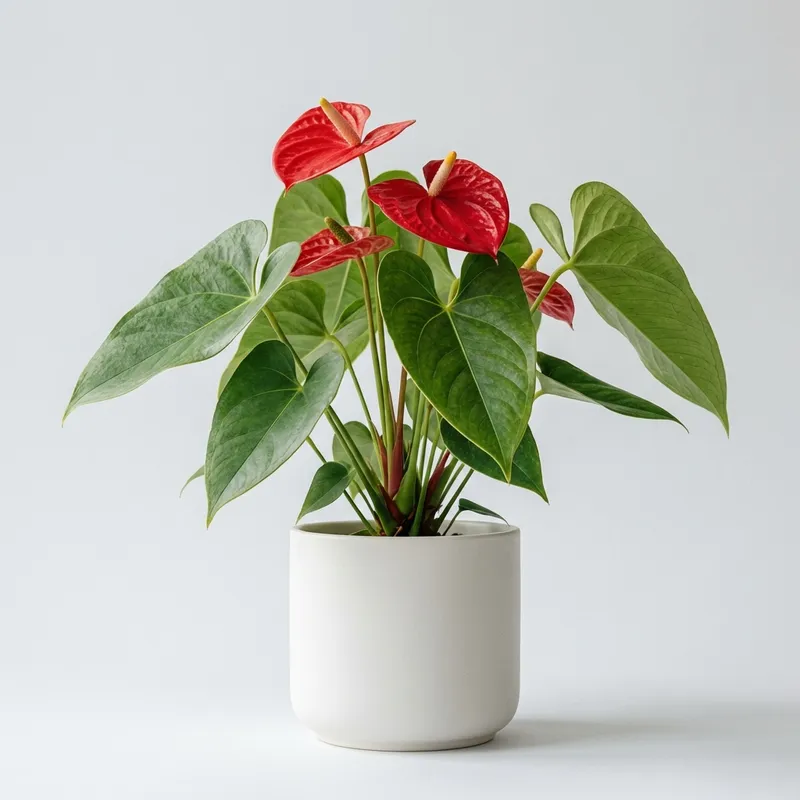
The Anthurium, also known as the Flamingo Flower or Laceleaf, is a striking tropical plant known for its glossy, heart-shaped leaves and vibrant, waxy spathes that look like flowers. These long-lasting blooms are actually modified leaves that surround a spike-like spadix, making it a favorite for adding an exotic, sophisticated touch to indoor spaces.
Light
Bright Indirect
Water
Moderate
Difficulty
Moderate
Humidity
High
Pet Warning
Anthuriums contain calcium oxalate crystals. If ingested, they can cause severe irritation of the mouth, throat, and digestive tract in both humans and pets. Signs of toxicity include drooling and difficulty swallowing.
Care Guide
Anthurium Care Guide
Light Requirements
Anthuriums thrive in bright, indirect light. Placing them near a window with filtered light is ideal. Avoid direct sunlight, as it can scorch the waxy leaves, while too little light will prevent the plant from producing its signature colorful spathes.
Watering Strategy
Keep the soil consistently moist but not waterlogged. Water when the top inch of soil feels dry to the touch. Ensure the pot has excellent drainage to prevent root rot, which is the plant's most common ailment.
Humidity and Temperature
As a tropical native, this plant loves high humidity (60% or higher). Use a humidifier or a pebble tray to maintain moisture levels. Keep temperatures stable between 65°F and 85°F (18°C-29°C), and protect it from cold drafts or heating vents.
Maintenance and Repotting
Repot every 2 years or when the plant becomes root-bound. Use a chunky, well-aerated mix similar to an orchid blend. Periodically wipe the leaves with a damp cloth to remove dust and keep the foliage shiny.
Common Troubleshooting
- Yellow leaves: Usually a sign of overwatering.
- Brown leaf tips: Indicates humidity is too low.
- No blooms: Likely needs more indirect light or a phosphorus boost.
In-Depth Care & Growth
Feeding & Soil
Fertilizer
Phosphorus-rich liquid fertilizer
Soil
Well-draining, coarse mix containing peat moss, orchid bark, and perlite
Physical Attributes
Mature Size
12-18 inches tall
Growth Rate
Slow
Propagation
Stem cuttings, division of root clumps