
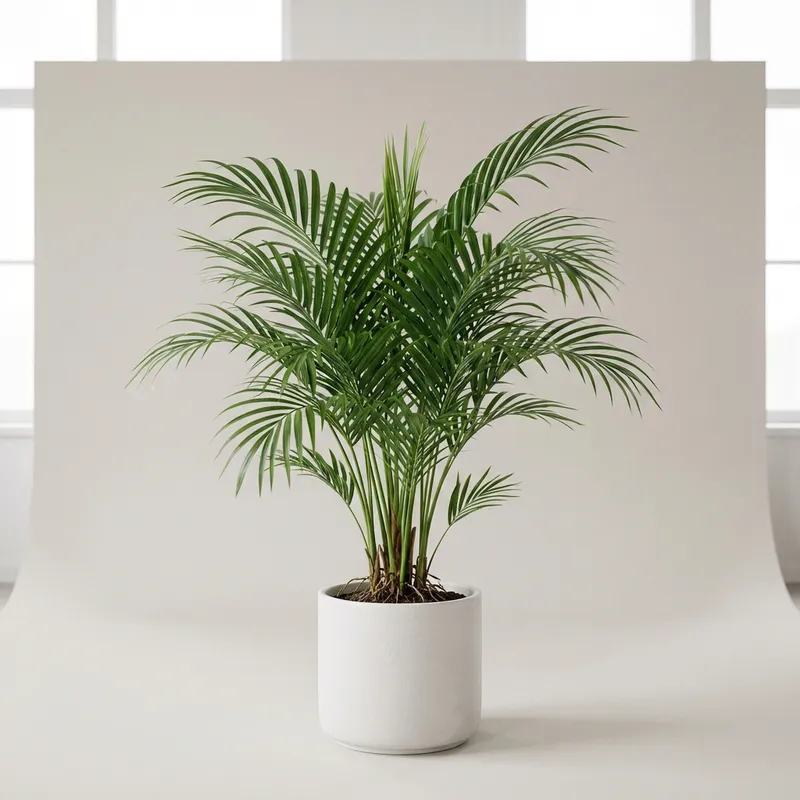
Areca Palm
Dypsis lutescens
The Areca Palm, also known as the Golden Cane Palm or Butterfly Palm, is a stunning tropical plant that creates a lush, indoor jungle atmosphere with its feathery, arching fronds. Growing in clusters, it is famous for its smooth, golden-yellow stems and its high efficiency in purifying indoor air and providing humidity. It is a classic choice for bright interiors and is completely safe for household pets.
Light
Bright Indirect
Water
Moderate
Difficulty
Moderate
Humidity
High
Pet Friendly
The Areca Palm is classified as non-toxic to cats and dogs by the ASPCA.
Care Guide
Areca Palm Care Guide
Lighting
Place in bright, indirect light. Direct sunlight can scorch the fronds, while too little light will slow growth and cause the palm to become leggy.
Watering
Keep the soil consistently moist but never soggy. Areca palms are sensitive to fluoride and salts in tap water, so it is best to use distilled water, rainwater, or filtered water.
Humidity
This palm thrives in high humidity. Mist the foliage daily, use a pebble tray, or place a humidifier nearby to prevent leaf tips from turning brown.
Soil & Potting
Use a well-draining, peat-based potting mix. Areca palms prefer to be slightly root-bound, so repot only every 2-3 years to avoid disturbing the sensitive root system.
Seasonal Care
In winter, reduce watering frequency and ensure the plant is kept away from cold drafts or heating vents, which can rapidly dry out the foliage.
In-Depth Care & Growth
Feeding & Soil
Fertilizer
Slow-release palm fertilizer or balanced liquid fertilizer
Soil
Well-draining, slightly acidic peat-based soil.
Physical Attributes
Mature Size
6-10 feet (indoors)
Growth Rate
Moderate
Propagation
Root clump division during repotting.