Bird of Paradise
Strelitzia reginae
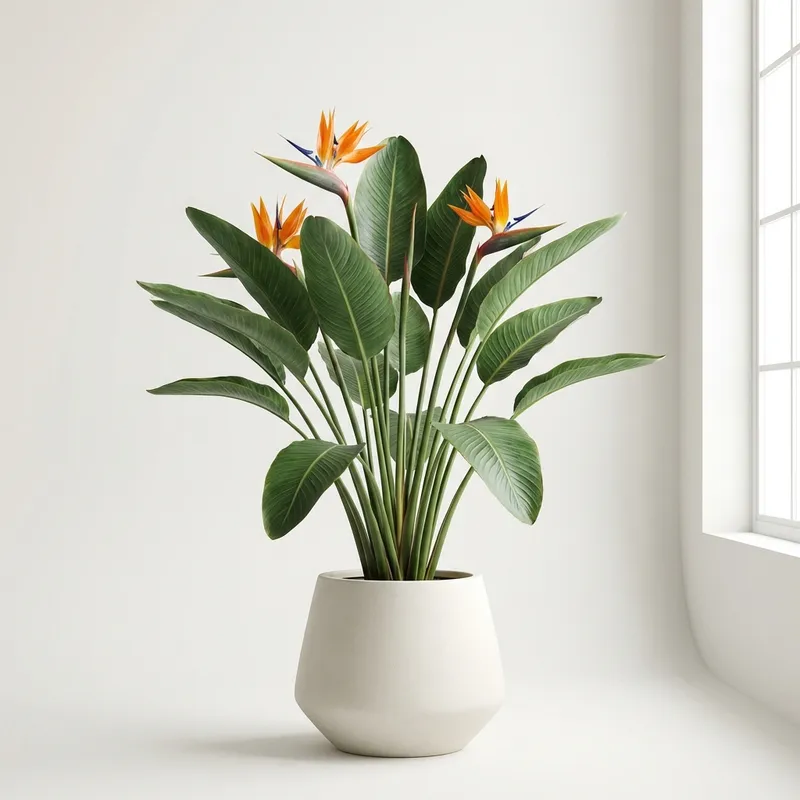
A regal and architectural masterpiece, the Bird of Paradise is renowned for its spectacular flowers that mimic the plumage of a tropical bird. Its large, upright, gray-green leaves add a dramatic, structural element to interior designs, evoking a lush, jungle-like atmosphere.
Light
Full Sun
Water
Moderate
Difficulty
Moderate
Humidity
Moderate
Pet Warning
Contains tannins and is considered mildly toxic to cats and dogs. Ingestion may cause vomiting, drowsiness, and diarrhea.
Care Guide
Light and Placement
Place your Bird of Paradise in the brightest spot possible. It needs at least 4-6 hours of direct sunlight to encourage blooming. A south-facing window is ideal.
Watering Strategy
Keep the soil consistently moist but not soggy during the summer. Allow the top 2-3 inches of soil to dry out before watering again. In the winter, allow the soil to dry out more thoroughly between waterings.
Humidity and Temperature
This plant enjoys moderate humidity. If your home is dry, mist the leaves or use a pebble tray. It prefers temperatures between 65°F and 85°F and should be protected from cold drafts.
Maintenance
Wipe the large leaves with a damp cloth regularly to prevent dust buildup and discourage pests like spider mites. Leaf splitting is a natural adaptation to allow wind to pass through and is not a sign of poor health.
In-Depth Care & Growth
Feeding & Soil
Fertilizer
Balanced water-soluble fertilizer (20-20-20)
Soil
Rich, well-draining potting soil with a slightly acidic to neutral pH.
Physical Attributes
Mature Size
5 to 6 feet tall, 3 to 4 feet wide
Growth Rate
Moderate
Propagation
Division of mature clumps or rhizomes during repotting; can also be grown from seed, though this takes years to flower.