Bird's Nest Fern
Asplenium nidus
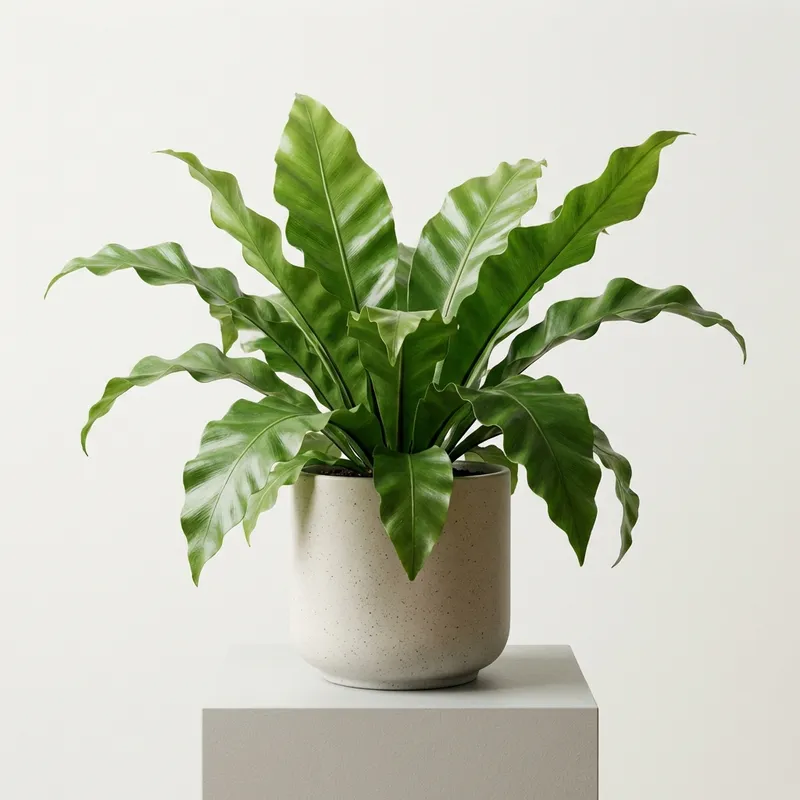
The Bird's Nest Fern is a stunning epiphytic plant known for its large, banana-like fronds that radiate from a central 'nest'. Native to tropical regions of Southeast Asia, Australia, and East Africa, this fern brings a lush, architectural feel to any indoor space with its vibrant green, wavy-edged foliage.
Light
Bright Indirect
Water
Moderate
Difficulty
Moderate
Humidity
High
Pet Friendly
The Bird's Nest Fern is non-toxic to cats, dogs, and horses, making it an excellent choice for pet-friendly households.
Care Guide
Care Guide for Asplenium nidus
Lighting
Place your Bird's Nest Fern in bright, indirect light. Avoid direct sunlight, which can scorch the delicate fronds. A north or east-facing window is usually ideal. It can tolerate moderate shade but may grow more slowly.
Watering
Keep the soil consistently moist but not soggy. This fern is sensitive to both drying out and overwatering. Crucial Tip: Water around the edge of the plant rather than into the center 'nest', as trapped water in the crown can cause heart rot.
Humidity
As a tropical fern, it requires high humidity (50% or higher). Use a humidifier, a pebble tray, or group it with other plants. It is a perfect candidate for a well-lit bathroom.
Soil and Potting
Use a well-draining, organic-rich potting mix. A blend of peat moss or coco coir with perlite and orchid bark mimics its natural epiphytic environment well.
Seasonal Care
During winter, reduce watering as the plant's growth slows, but do not let the soil dry out completely. Keep it away from cold drafts and heating vents.
Common Issues
- Yellow Fronds: Often a sign of overwatering or poor drainage.
- Brown Edges: Usually indicates low humidity or the use of hard water/chemical buildup.
In-Depth Care & Growth
Feeding & Soil
Fertilizer
Balanced liquid houseplant fertilizer
Soil
Well-draining, peat-based mix or epiphytic blend containing orchid bark and perlite.
Physical Attributes
Mature Size
2 to 4 feet wide and tall (indoors)
Growth Rate
Moderate
Propagation
Propagated via spores or tissue culture; it does not divide like most other ferns.