Burro's Tail
Sedum morganianum
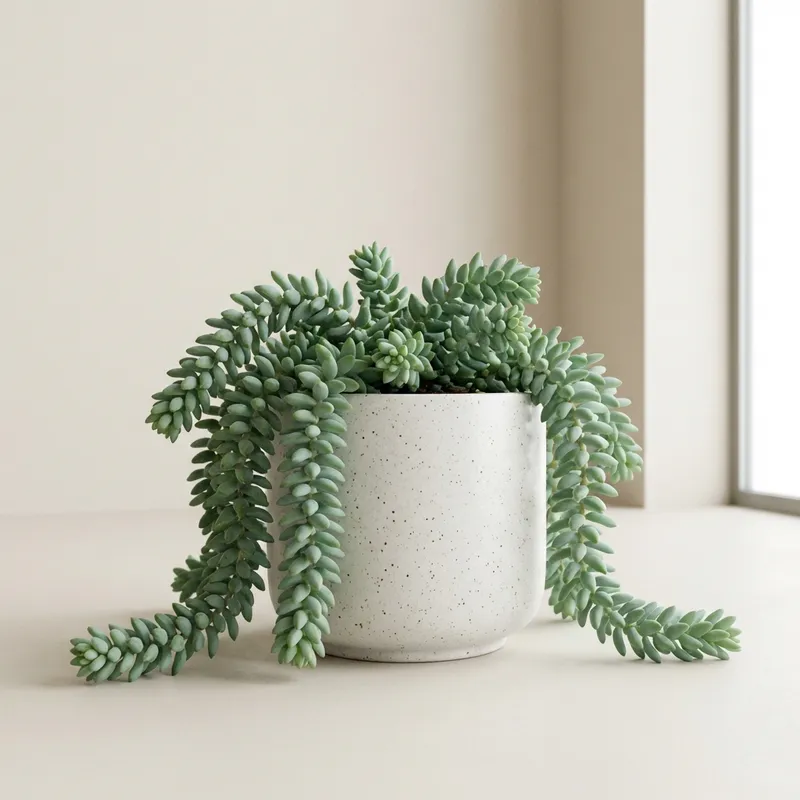
A striking perennial succulent native to southern Mexico, the Burro's Tail is cherished for its long, cascading stems densely packed with fleshy, blue-green leaves. These teardrop-shaped leaves overlap like shingles, creating a braided or 'tail-like' appearance that can grow several feet long, making it a spectacular choice for hanging baskets.
Light
Bright Indirect
Water
Low
Difficulty
Easy
Humidity
Low
Pet Friendly
The Sedum morganianum is considered non-toxic to cats, dogs, and horses, making it a safe choice for pet-friendly households.
Care Guide
Burro's Tail Care Guide
Lighting
Place your Burro's Tail in a location that receives 4-6 hours of bright, indirect sunlight daily. While it can tolerate some direct morning sun, harsh afternoon rays can scorch the delicate leaves. If the plant becomes leggy or pale, it likely needs more light.
Watering Strategy
This succulent is drought-tolerant and highly susceptible to root rot. Use the 'soak and dry' method: water the soil thoroughly until it drains out the bottom, then wait for the soil to dry out completely before watering again. During winter months, reduce watering frequency significantly.
Handling and Placement
Crucial Tip: The leaves are extremely fragile and will fall off at the slightest touch. Hang the plant in a low-traffic area where it won't be bumped. If leaves do fall, they can often be used for propagation.
Soil and Drainage
Always use a well-draining cactus or succulent potting mix. Ensure the pot has drainage holes to prevent standing water at the roots.
Temperature
Maintain temperatures between 65°F and 75°F (18°C-24°C). It is not frost-hardy and should be moved indoors if temperatures drop below 40°F (4°C).
In-Depth Care & Growth
Feeding & Soil
Fertilizer
Balanced 10-10-10 liquid fertilizer or cactus-specific fertilizer
Soil
Well-draining succulent or cactus mix with a neutral to slightly acidic pH.
Physical Attributes
Mature Size
Stems can reach 2 to 4 feet in length
Growth Rate
Moderate
Propagation
Leaf cuttings or stem cuttings. Simply lay fallen leaves on top of moist soil to sprout new plantlets.