Crocodile Fern
Microsorum musifolium 'Crocodyllus'
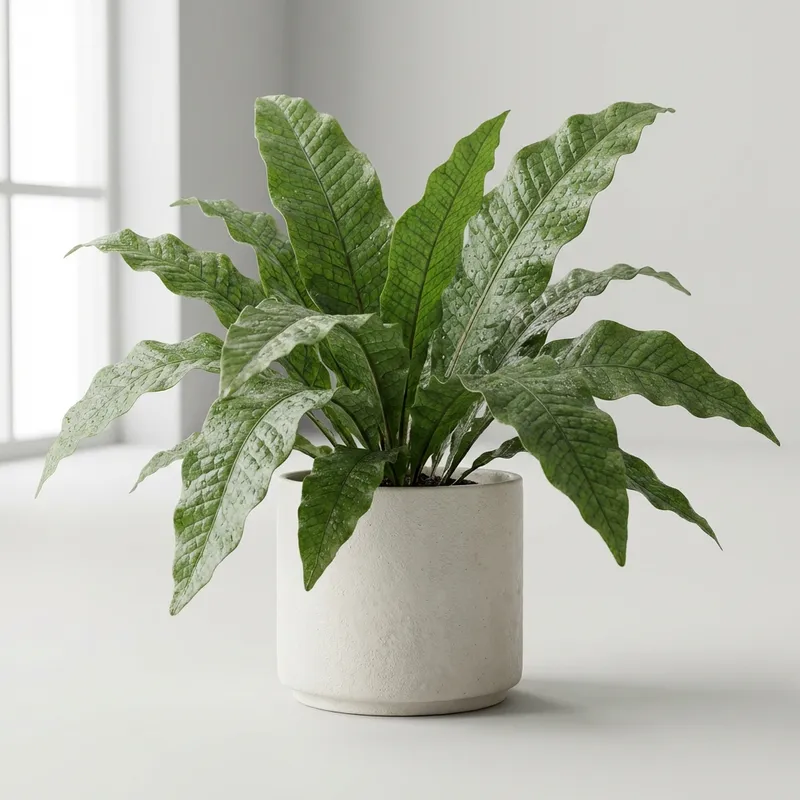
The Crocodile Fern is a unique and captivating epiphytic plant originating from Southeast Asia. Its most striking feature is the intricate, scale-like pattern of its dark green veins against the bright green, glossy fronds, which remarkably resembles crocodile skin. Unlike many delicate ferns, its foliage is thick and leathery, making it slightly more resilient than its counterparts while adding a prehistoric, architectural aesthetic to any indoor space.
Light
Bright Indirect
Water
Moderate
Difficulty
Moderate
Humidity
High
Pet Friendly
The Crocodile Fern is considered non-toxic to cats, dogs, and horses, making it a safe choice for pet-owning households.
Care Guide
Crocodile Fern Care Guide
Watering: Keep the soil consistently moist but never waterlogged. Allow the top inch of soil to dry out slightly before watering again. Using a pot with drainage holes is essential to prevent root rot.
Lighting: This fern thrives in bright, indirect light. Avoid direct afternoon sun, which can scorch the leathery fronds. It can tolerate medium light conditions, though growth will slow down.
Humidity & Temperature: Maintaining high humidity (60% or higher) is key to keeping the fronds lush. Use a humidifier or a pebble tray if your indoor air is dry. Keep the plant in temperatures between 65°F and 80°F (18°C - 27°C) and avoid cold drafts.
Common Issues: If the leaf tips turn brown, it is likely due to low humidity or hard water. Yellowing leaves may indicate overwatering or poor drainage.
Seasonal Tips: In winter, reduce watering frequency as the plant's growth slows, but continue to maintain high humidity levels.
In-Depth Care & Growth
Feeding & Soil
Fertilizer
Balanced liquid houseplant fertilizer
Soil
A rich, well-draining potting mix such as a blend of peat moss or coco coir with perlite or orchid bark.
Physical Attributes
Mature Size
2 to 3 feet tall and wide
Growth Rate
Moderate
Propagation
Rhizome division during repotting in the spring.