
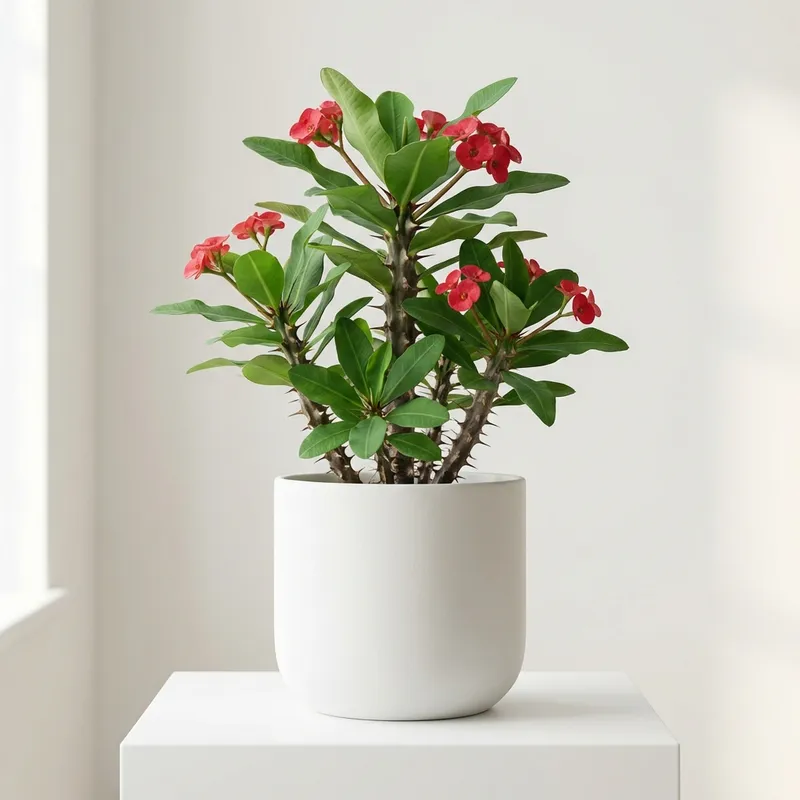
Crown of Thorns
Euphorbia milii
The Crown of Thorns is a resilient and visually striking succulent shrub native to Madagascar. Known for its thick, woody stems covered in sharp thorns and its ability to produce vibrant, long-lasting bracts in shades of red, pink, yellow, and white, it is a favorite for sunny indoor spaces. This plant is exceptionally drought-tolerant and can bloom year-round under optimal light conditions.
Light
Full Sun
Water
Low
Difficulty
Easy
Humidity
Low
Pet Warning
All parts of the plant are toxic. The milky sap contains caustic diterpene esters that cause severe skin and eye irritation. If ingested by pets or humans, it causes intense burning of the mouth and throat, nausea, and vomiting.
Care Guide
Crown of Thorns Comprehensive Care Guide 1. Lighting Requirements: This plant requires a minimum of 4 to 6 hours of direct sunlight daily to produce blooms. A south- or west-facing window is highly recommended. 2. Watering Protocol: Use the 'soak and dry' method. Allow the top 50% of the soil to dry out completely before watering thoroughly. Ensure the pot has drainage holes to prevent root rot. 3. Temperature: Maintain indoor temperatures between 65°F and 85°F. Avoid placing the plant near cold drafts or air conditioning vents. 4. Pruning and Maintenance: Prune in early spring to encourage bushier growth and more flowers. Caution: Always wear thick gloves and protective eyewear when pruning to avoid contact with thorns and the toxic milky sap. 5. Seasonal Care: During the winter months, the plant enters a semi-dormant state. Significantly reduce watering and stop fertilization until new growth appears in spring.
In-Depth Care & Growth
Feeding & Soil
Fertilizer
Balanced 10-10-10 liquid fertilizer
Soil
A well-draining succulent or cactus potting mix with a pH of 6.1 to 7.5.
Physical Attributes
Mature Size
2 to 3 feet tall
Growth Rate
Slow
Propagation
Stem cuttings (allow the cut end to callus for several days before planting).