
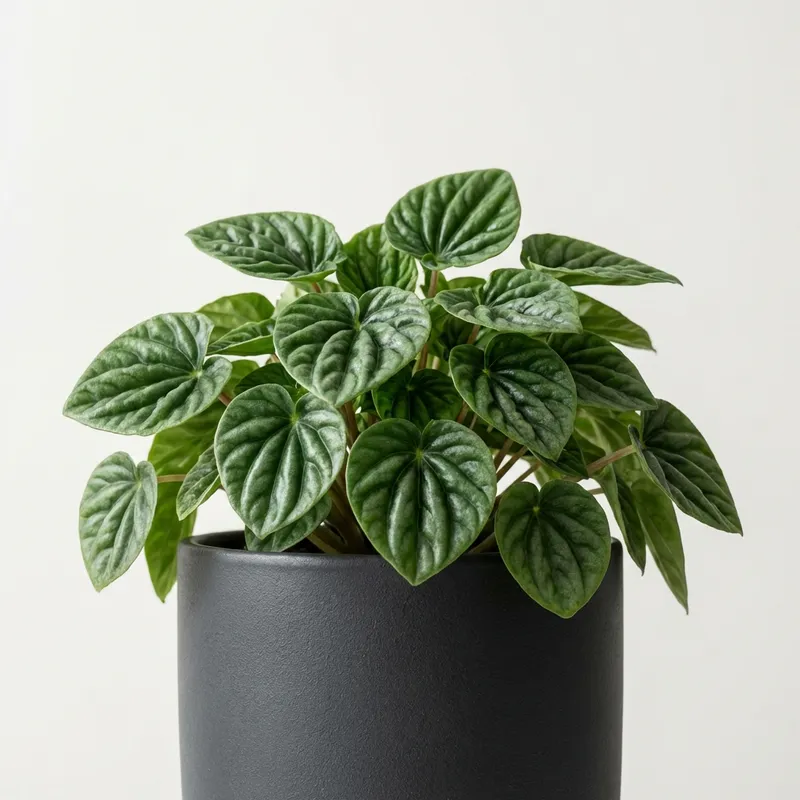
Emerald Ripple Peperomia
Peperomia caperata
The Emerald Ripple Peperomia is a popular and striking indoor plant characterized by its compact, mounded growth habit and deeply corrugated, heart-shaped leaves. Native to the rainforests of Brazil, it features iridescent foliage that ranges from deep emerald green to rich burgundy. The plant produces unique, white or cream-colored flower spikes that resemble rat tails, adding to its whimsical charm. Its small stature makes it an ideal choice for tabletops, shelving, and terrariums.
Light
Bright Indirect
Water
Moderate
Difficulty
Easy
Humidity
Moderate
Pet Friendly
This plant is non-toxic to cats, dogs, and horses, making it a safe choice for pet-friendly households.
Care Guide
Peperomia Caperata Care Guide Light: Provide bright, filtered sunlight. While it can tolerate medium light, its leaves may lose their deep texture and vibrant color. Avoid direct sunlight as it can scorch the delicate foliage. Watering: Water when the top 50% to 75% of the soil has dried out. This plant is sensitive to overwatering; always check soil moisture before adding more. Water from the bottom or at the soil line to avoid moisture sitting on the leaves. Soil: Use a well-aerated, well-draining potting mix. A combination of peat moss, perlite, and a bit of orchid bark is ideal. Temperature: Maintain temperatures between 65°F and 80°F (18°C-27°C). Protect the plant from cold drafts and air conditioning vents. Pruning: Remove spent flower spikes and any yellowing or damaged leaves at the base of the stem to maintain a tidy appearance. Common Issues: Drooping leaves may indicate either underwatering or root rot from overwatering. Yellowing leaves are typically a sign of excess moisture.
In-Depth Care & Growth
Feeding & Soil
Fertilizer
Balanced liquid fertilizer
Soil
Well-draining, peat-based mix with perlite or coarse sand for aeration.
Physical Attributes
Mature Size
6 to 8 inches tall and wide
Growth Rate
Slow
Propagation
Leaf cuttings, stem cuttings, or plant division during repotting.