Felt Bush
Kalanchoe beharensis
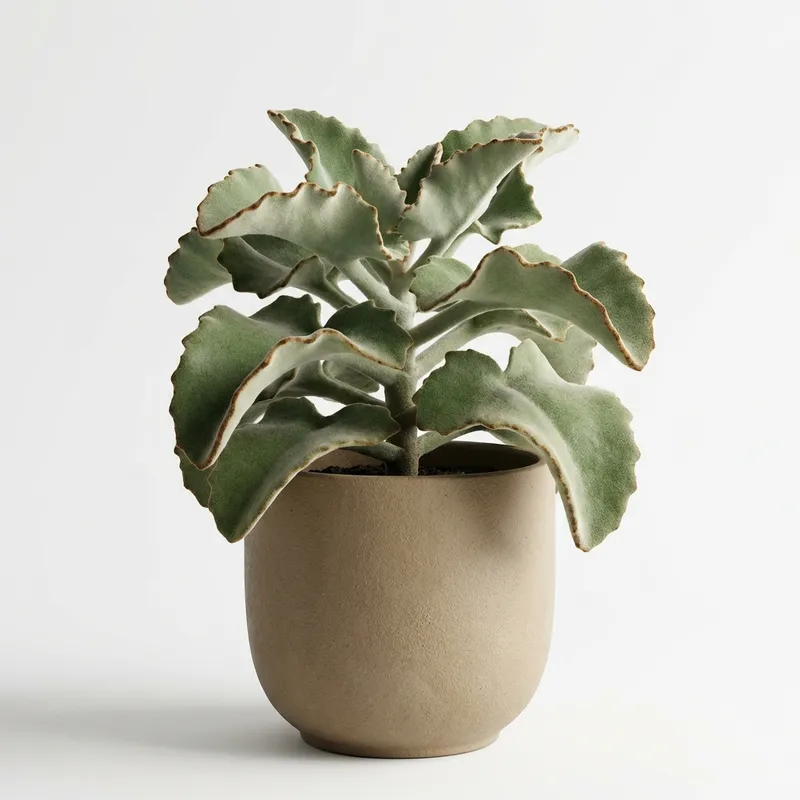
An architectural marvel from Madagascar, the Felt Bush is a slow-growing succulent shrub that captivates with its large, triangular, shield-like leaves. Covered in a dense, velvety layer of cinnamon to silver-colored hairs, the leaves feel like soft felt or suede. Their wavy, scalloped edges and woody stems give the plant a primitive, sculptural appearance, making it a dramatic focal point for any indoor plant collection.
Light
Full Sun
Water
Low
Difficulty
Easy
Humidity
Low
Pet Warning
Contains cardiac glycosides (bufadienolides) which are toxic to dogs, cats, and horses. Ingestion can cause vomiting, diarrhea, and in rare cases, abnormal heart rhythms.
Care Guide
Lighting
Kalanchoe beharensis thrives in bright light. Place it in a south-facing window where it can receive at least 6 hours of sunlight daily. If the plant becomes leggy, it is a sign it needs more light.
Watering
Succulent care rules apply: allow the soil to dry out completely between waterings. In the winter, reduce watering to once every month or two, as the plant enters a semi-dormant state. Avoid getting water on the velvety leaves to prevent rot or fungal issues.
Soil and Potting
Use a gritty, well-draining cactus or succulent potting mix. A terracotta pot is recommended as it allows moisture to evaporate more efficiently through the walls.
Temperature
Keep the plant in a warm environment (65°F–80°F). It is not frost-hardy and should be protected from temperatures below 50°F. Avoid placing it near cold drafts or air conditioning vents.
Common Issues
Watch out for mealybugs, which can hide in the velvety crevices of the leaves. Overwatering is the most common cause of failure, leading to root rot. If the leaves start to drop or feel mushy, stop watering immediately and check the roots.
In-Depth Care & Growth
Feeding & Soil
Fertilizer
Balanced succulent fertilizer
Soil
Well-draining succulent mix with perlite, pumice, or coarse sand
Physical Attributes
Mature Size
3 to 5 feet tall indoors; up to 12 feet in native habitat
Growth Rate
Slow
Propagation
Stem cuttings or leaf cuttings (leaf cuttings take significantly longer to produce plantlets)