Fiddle Leaf Fig
Ficus lyrata
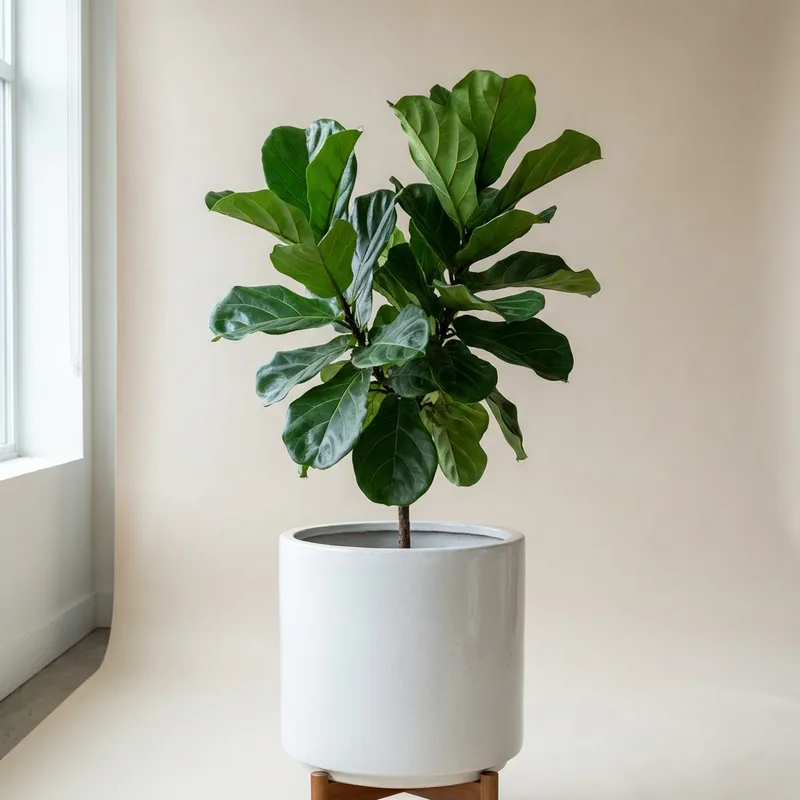
The Fiddle Leaf Fig is an iconic indoor tree prized for its large, waxy, violin-shaped leaves. Native to the tropical rainforests of West Africa, it has become a staple in interior design for its bold, architectural presence and lush green foliage.
Light
Bright Indirect
Water
Moderate
Difficulty
Moderate
Humidity
High
Pet Warning
The sap contains calcium oxalate crystals which are irritating to the mouth and stomach of pets and humans if ingested, leading to oral irritation, drooling, and vomiting.
Care Guide
Fiddle Leaf Fig Care Guide
Lighting
Place in a spot with plenty of bright, filtered light. Avoid direct sun which can burn the leaves, but ensure it is not in a dark corner. Rotate the plant 90 degrees every time you water to ensure even growth and prevent it from leaning.
Watering
Allow the top 2 inches of soil to dry out between waterings. When you water, do so thoroughly until water drains from the bottom. Avoid letting the plant sit in standing water, as this species is highly susceptible to root rot.
Maintenance
Wipe the leaves with a damp cloth every few weeks to remove dust and help the plant breathe. Trim any brown or damaged leaves to encourage new growth. Keep the plant away from air vents, drafty windows, or heaters, as they dislike sudden temperature changes.
Troubleshooting
If leaves turn brown and drop, it may be due to overwatering or a cold draft. Small reddish-brown spots on new leaves often indicate edema from inconsistent watering schedules.
In-Depth Care & Growth
Feeding & Soil
Fertilizer
High-nitrogen liquid plant food
Soil
Well-draining, peat-based potting mix with a slightly acidic pH.
Physical Attributes
Mature Size
6 to 10 feet tall indoors
Growth Rate
Moderate
Propagation
Stem cuttings or air layering