
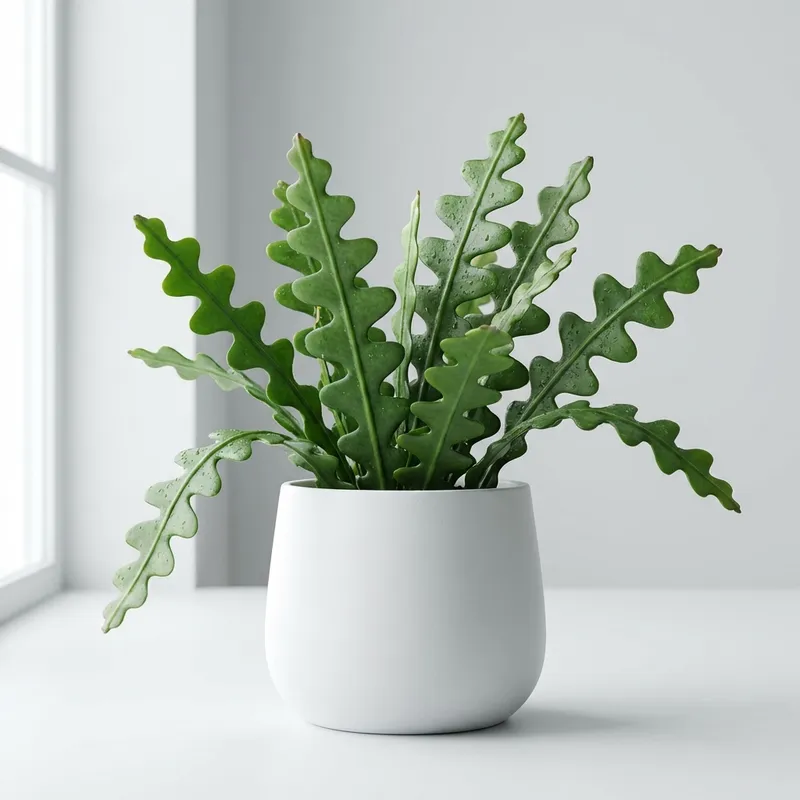
Fishbone Cactus
Epiphyllum anguliger
Known for its striking, serrated foliage that mimics the shape of a fish skeleton, the Epiphyllum anguliger is an epiphytic cactus native to the rainforests of Mexico. Unlike typical desert cacti, this plant features flat, succulent stems with deep lobes. In the right conditions, it produces large, fragrant, cream-colored flowers that bloom exclusively at night, filling the air with a sweet, jasmine-like scent.
Light
Bright Indirect
Water
Moderate
Difficulty
Easy
Humidity
Moderate
Pet Friendly
The Fishbone Cactus is non-toxic to cats, dogs, and horses, making it an excellent choice for pet owners.
Care Guide
Light and Location
Place your Fishbone Cactus in a spot that receives bright, filtered light. While it can handle small amounts of direct morning sun, intense afternoon rays can bleach or scorch the stems. A north or east-facing window is often ideal.### Watering Routine As an epiphytic cactus, it prefers more moisture than its desert cousins. Water thoroughly when the top two inches of soil have dried out. Ensure the pot has excellent drainage to prevent root rot. During winter, reduce watering frequency significantly.### Soil and Potting Use a chunky, well-aerated potting mix. A combination of orchid bark, perlite, and peat-based potting soil works best to mimic its natural environment in tree canopies. These plants enjoy being slightly root-bound.### Temperature and Humidity Maintain temperatures between 60°F and 80°F (15°C - 27°C). It appreciates moderate humidity; if your home is dry, consider misting the plant or using a pebble tray. To encourage blooming in the spring, keep the plant in a cooler room (around 55°F) during the winter months.### Common Issues Wrinkled stems usually indicate underwatering or low humidity, while yellowing, mushy stems are a sign of overwatering. Keep an eye out for mealybugs in the deep crevices of the leaves.
In-Depth Care & Growth
Feeding & Soil
Fertilizer
Balanced liquid fertilizer (10-10-10) or bloom booster (low nitrogen) in early spring
Soil
Well-draining, porous orchid-style mix with organic matter, bark, and perlite.
Physical Attributes
Mature Size
2 to 3 feet in length
Growth Rate
Moderate
Propagation
Stem cuttings (allow to callous for a few days before planting in soil or water).