
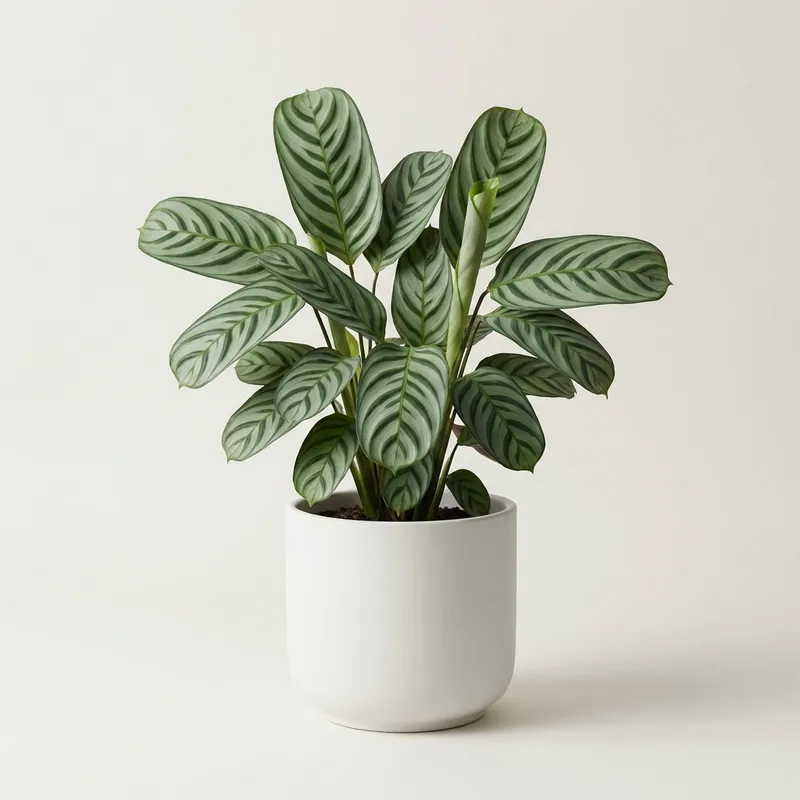
Fishbone Prayer Plant
Ctenanthe burle-marxii
A striking member of the Marantaceae family, Ctenanthe burle-marxii is celebrated for its low, spreading habit and stunning fishbone-patterned leaves. Its pale green foliage is accented by dark green stripes and deep purple undersides, creating a dramatic visual effect. Like other prayer plants, its leaves exhibit nyctinasty, rhythmically rising and folding at night in response to light levels and circadian rhythms.
Light
Bright Indirect
Water
Moderate
Difficulty
Moderate
Humidity
High
Pet Friendly
Ctenanthe burle-marxii is considered non-toxic to cats and dogs, making it an excellent choice for pet owners.
Care Guide
Ctenanthe burle-marxii Care Guide
Light
Position your plant in bright, indirect light. Direct sunlight will bleach the leaves or cause brown scorch marks. While it can tolerate lower light, growth will be significantly slower and the vivid patterns may fade.
Watering
Keep the soil consistently moist but never soggy. Use lukewarm, filtered water or rainwater, as this plant is sensitive to fluoride and other chemicals found in tap water. Water when the top 0.5 to 1 inch of soil is dry to the touch.
Humidity
This plant thrives in high humidity (ideally above 60%). Use a humidifier, group it with other plants, or place it on a pebble tray with water to maintain ambient moisture and prevent crispy leaf tips.
Temperature
Maintain temperatures between 65°F and 85°F (18°C - 29°C). It is sensitive to cold, so protect it from drafts, air conditioning vents, and any sudden temperature fluctuations.
Common Issues
- Yellowing leaves: Typically a sign of overwatering or soil that is holding too much moisture.
- Crispy/Brown leaf edges: Usually indicates low humidity or a reaction to minerals in the water.
- Curled leaves: Often a defense mechanism against too much light or lack of water.
- Pests: Inspect regularly for spider mites and mealybugs, which are the most common pests for this species.
In-Depth Care & Growth
Feeding & Soil
Fertilizer
Water-soluble balanced fertilizer diluted to half strength
Soil
A well-draining, aerated mix containing peat moss, perlite, and pine bark to retain moisture without becoming compacted.
Physical Attributes
Mature Size
10-12 inches tall, 15-20 inches wide
Growth Rate
Moderate
Propagation
Propagated through root division during the spring repotting season. Ensure each division has a healthy root system and at least one leaf shoot.