
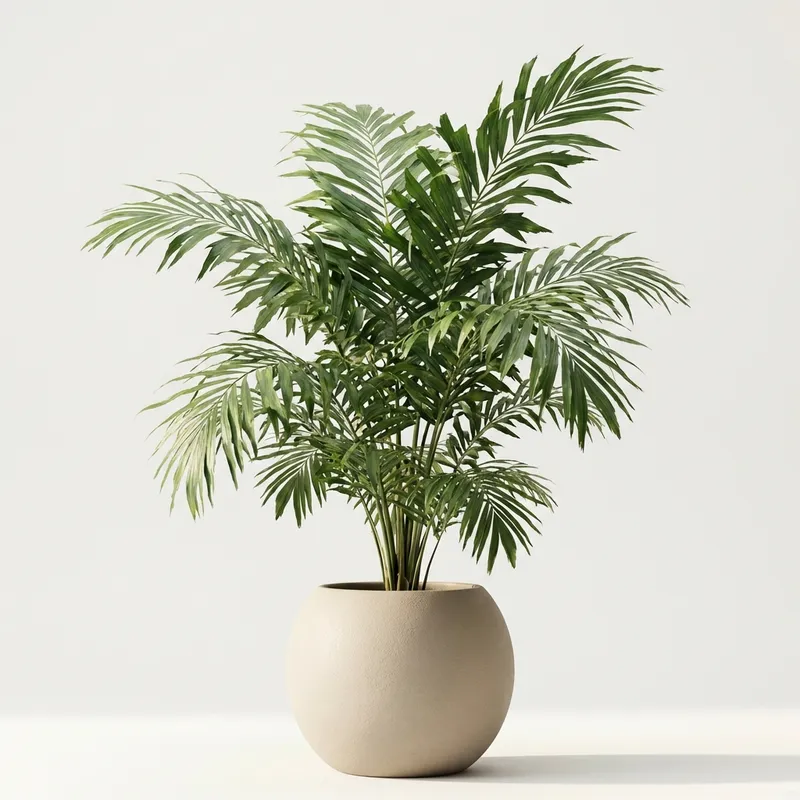
Fishtail Palm
Caryota mitis
The Fishtail Palm is a striking and architectural houseplant known for its unusual, jagged foliage that resembles the tail fins of fish. Native to Southeast Asia, this clumping palm brings a lush, tropical atmosphere to indoor environments. Its bipinnate leaves and multi-stemmed growth habit make it a centerpiece for large rooms or bright hallways.
Light
Bright Indirect
Water
Moderate
Difficulty
Moderate
Humidity
High
Pet Warning
Fishtail palms contain calcium oxalate crystals. While the leaves are generally handled safely, the berries (rarely seen indoors) and sap can cause severe skin irritation and are toxic if ingested by pets or humans.
Care Guide
Light
Fishtail Palms need bright, indirect sunlight to thrive. A spot near an east-facing window or a few feet back from a south-facing window is ideal. Avoid direct afternoon sun, which can burn the fronds.
Watering
Keep the soil consistently moist but never waterlogged. Water when the top inch of soil feels dry. Palms are sensitive to chemicals in tap water, so using filtered or distilled water can prevent brown tips.
Humidity & Temperature
High humidity is crucial. Aim for 50% or higher using a humidifier or pebble tray. They prefer stable temperatures between 65-85°F (18-29°C) and should be kept away from cold drafts and heating vents.
Common Issues
Watch for spider mites, which love the dry conditions often found indoors. Regularly wiping leaves with a damp cloth helps keep pests away and removes dust.
In-Depth Care & Growth
Feeding & Soil
Fertilizer
Liquid palm fertilizer with micronutrients like manganese
Soil
Well-draining, peat-based potting mix with added perlite.
Physical Attributes
Mature Size
6-10 feet (indoors)
Growth Rate
Moderate
Propagation
Division of suckers (offsets) or by seed.