
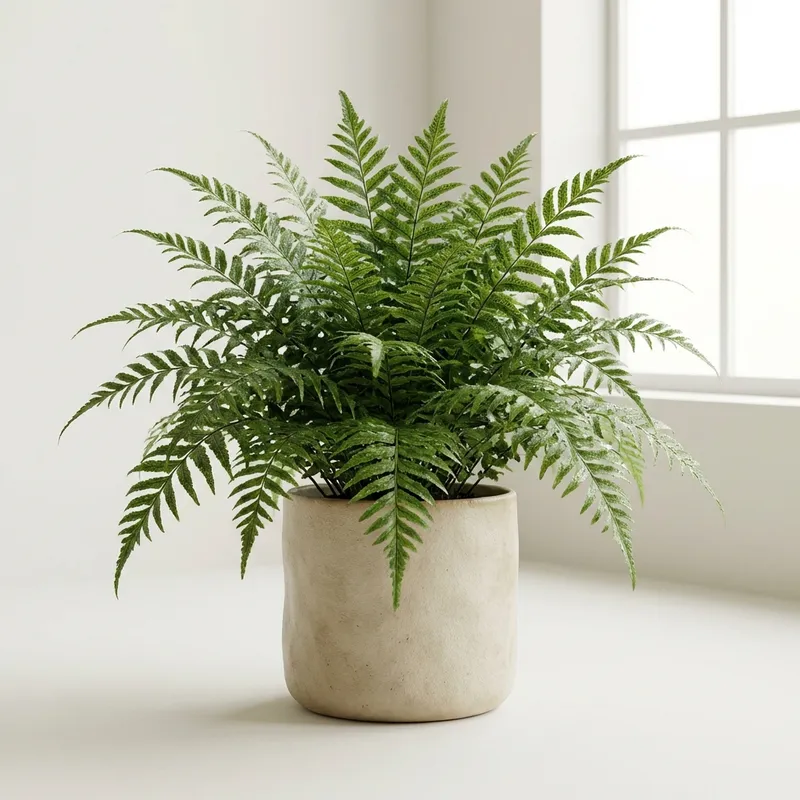
Fishtail Sword Fern
Nephrolepis falcata
The Fishtail Sword Fern is a striking and elegant evergreen plant known for its unique, bifurcated fronds that split at the tips, resembling a fish's tail. This tropical beauty adds a lush, architectural texture to indoor spaces with its arching, bright green foliage and dense growth habit.
Light
Bright Indirect
Water
High
Difficulty
Moderate
Humidity
High
Pet Friendly
Nephrolepis falcata is considered non-toxic to cats, dogs, and other common household pets, making it an excellent choice for animal-friendly homes.
Care Guide
Fishtail Sword Fern Care Guide
Light
Place your fern in a location that receives bright, filtered light. Avoid direct afternoon sun, which can quickly burn the delicate bifurcated tips of the fronds.
Watering
This species requires consistently moist soil. Check the plant frequently and water as soon as the surface of the soil feels barely dry. Never allow the soil to dry out completely, as this will cause immediate frond drop.
Humidity
High humidity is essential for success. Ideally, maintain levels above 60%. Use a humidifier, a pebble tray, or group it with other plants. Browning tips are a primary sign of dry air.
Temperature
Keep the plant in a stable environment between 65°F and 80°F (18°C-27°C). Protect it from cold drafts and the drying air of heating vents.
Seasonal Tips
During winter, the plant's growth slows. While you should still keep the soil moist, be careful not to overwater if the temperature is cooler. Increase humidity efforts during months when indoor heating is active.
Common Issues
Yellowing leaves are often a sign of overwatering or poor drainage, while crispy brown edges indicate low humidity or underwatering.
In-Depth Care & Growth
Feeding & Soil
Fertilizer
Balanced liquid fertilizer diluted to half-strength
Soil
A rich, peat-based potting mix that retains moisture while allowing for adequate drainage.
Physical Attributes
Mature Size
2 to 3 feet tall and wide
Growth Rate
Moderate
Propagation
Propagate by dividing the root ball during repotting or by removing and potting the small runners (stolons) that grow from the base.