
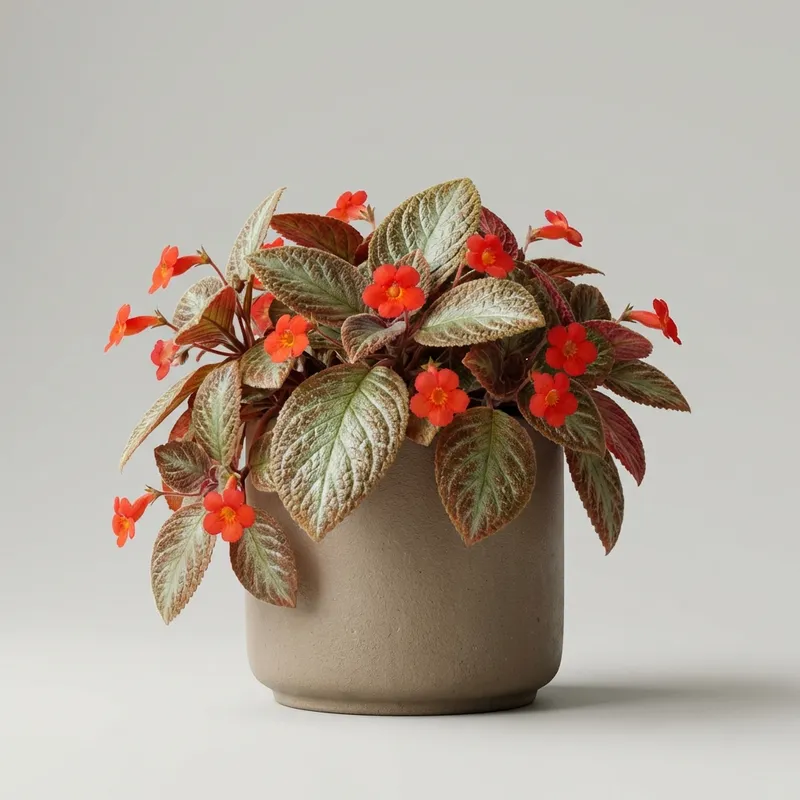
Flame Violet
Episcia cupreata
The Flame Violet is a striking tropical perennial known for its velvety, metallic-sheen foliage and bright, trumpet-shaped flowers. Belonging to the Gesneriad family, it is a relative of the African Violet and shares its preference for warmth and humidity. Its stoloniferous growth habit allows it to spread like a carpet or trail beautifully from hanging baskets, with leaves featuring shades of copper, emerald green, and silver.
Light
Bright Indirect
Water
Moderate
Difficulty
Moderate
Humidity
High
Pet Friendly
Episcia cupreata is listed by the ASPCA as non-toxic to dogs, cats, and horses.
Care Guide
Light
Provide bright, indirect light. Avoid direct sun, which can scorch the leaves and cause them to turn crisp or yellow. North or east-facing windows are often ideal.
Watering
Maintain consistently moist soil but avoid waterlogging. It is crucial to water the soil directly rather than the leaves, as water trapped on the velvety foliage can cause fungal rot and spotting. Bottom-watering is a highly effective method for this species.
Humidity and Temperature
High humidity is essential; levels should remain above 50%. Use a humidifier or a humidity tray, though avoid misting the leaves directly. Keep temperatures between 65°F and 80°F (18°C–27°C) and protect the plant from cold drafts and AC vents.
Soil and Potting
Use a light, airy, and well-draining potting mix, such as an African Violet mix or a blend of peat moss and perlite. Shallow pots are often better suited for their root systems.
Common Issues
Curling or brown leaf edges typically indicate low humidity or underwatering. Leggy growth suggests the plant is not receiving enough light to maintain its compact, lush form.
In-Depth Care & Growth
Feeding & Soil
Fertilizer
Balanced, water-soluble fertilizer (such as 10-10-10) or African Violet specific food
Soil
Well-draining, peat-based African Violet mix with perlite or vermiculite.
Physical Attributes
Mature Size
6-10 inches tall and spreading 12-24 inches wide via stolons
Growth Rate
Moderate
Propagation
Stolons (runners), stem cuttings, or leaf cuttings.