Goeppertia roseopicta 'Dottie'
Goeppertia roseopicta
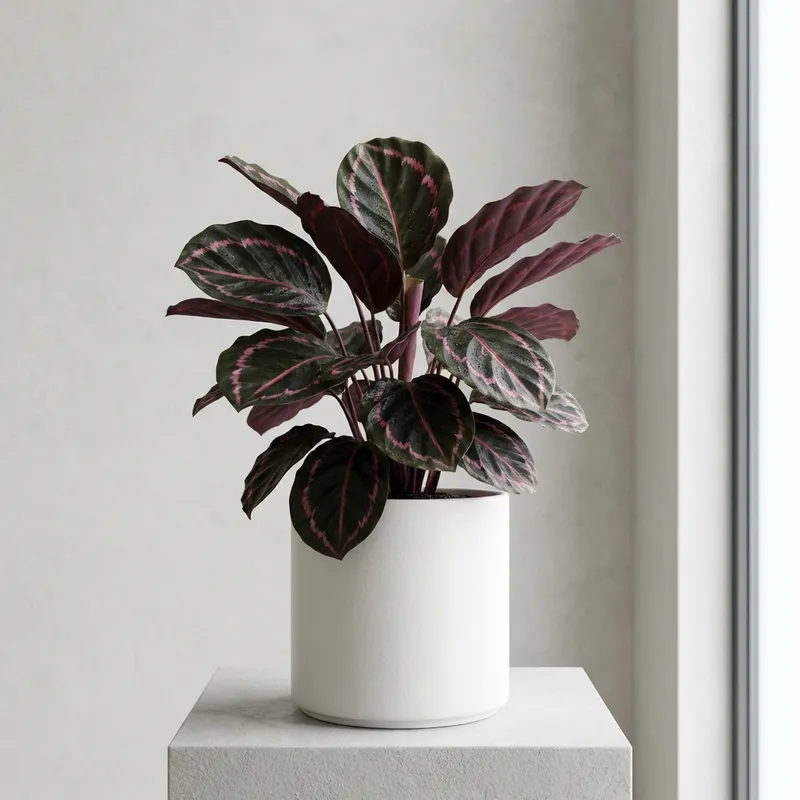
Goeppertia roseopicta 'Dottie', commonly known as Calathea Dottie, is a visually arresting tropical perennial favored for its ornamental foliage. Its large, orbicular leaves are a deep, velvety burgundy that appears almost black, highlighted by a vibrant, neon-pink ring that follows the leaf's margin and a matching pink central vein. As a member of the prayer-plant family, Dottie displays nyctinasty, where its leaves move upward at night and lower during the day, a captivating dance that adds a dynamic element to any indoor space.
Light
Bright Indirect
Water
Moderate
Difficulty
Moderate
Humidity
High
Pet Friendly
This plant is non-toxic to cats and dogs according to the ASPCA.
Care Guide
Light Requirements
Place 'Dottie' in bright, indirect light. Avoid direct sunlight, which can burn the leaves and cause the pink variegation to fade. A north or east-facing window provides the ideal filtered light environment.
Watering and Water Quality
Water when the top inch of soil feels dry to the touch. This plant is notoriously sensitive to fluoride, chlorine, and salts found in tap water, which can cause crisp, brown leaf edges. For best results, use distilled water, rainwater, or filtered water. Ensure the soil remains consistently moist but not waterlogged to prevent root rot.
Humidity and Temperature
Maintaining high humidity (above 60%) is crucial for 'Dottie'. Use a humidifier, group plants together, or utilize a pebble tray. Keep the plant in a warm environment between 65°F and 80°F (18°C–27°C). Avoid placing it near air conditioning vents, heaters, or drafty windows.
Soil and Potting
Use a well-draining, moisture-retentive potting mix, such as a blend of two parts peat moss or coco coir to one part perlite. Ensure the pot has adequate drainage holes.
Maintenance and Troubleshooting
Wipe leaves regularly with a damp cloth to remove dust and prevent pest infestations. If leaves curl, the plant is likely thirsty or the air is too dry. Yellowing leaves often indicate overwatering or poor drainage.
In-Depth Care & Growth
Feeding & Soil
Fertilizer
Balanced liquid houseplant fertilizer (10-10-10)
Soil
Well-draining, moisture-retentive mix with peat, perlite, and pine bark.
Physical Attributes
Mature Size
12-20 inches tall and wide
Growth Rate
Moderate
Propagation
Rhizome division during the spring repotting season.