Grey Star
Ctenanthe setosa
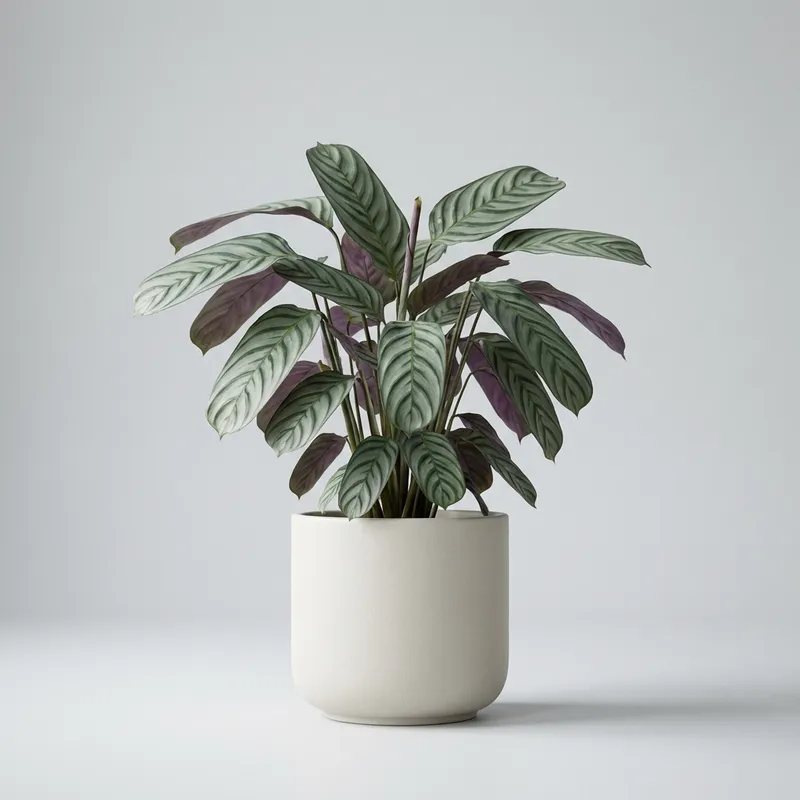
A striking member of the Marantaceae family, Ctenanthe setosa features elongated, lance-shaped leaves with a sophisticated silver-grey upper surface accented by dark green veins. Its most dramatic feature is the deep purple or burgundy underside of the foliage, which is revealed nightly as the plant folds its leaves upward in a prayer-like motion. This tropical beauty adds architectural interest and dynamic movement to any indoor space.
Light
Bright Indirect
Water
Moderate
Difficulty
Moderate
Humidity
High
Pet Friendly
Ctenanthe setosa is considered non-toxic to cats, dogs, and horses, making it an excellent choice for pet owners.
Care Guide
Care Guide for Ctenanthe setosa
Light
Ctenanthe setosa thrives in bright, indirect light. Direct sunlight should be avoided as it can scorch the delicate foliage and cause the vibrant patterns to fade. It can tolerate lower light levels, but growth will be significantly slower and the leaves may lose their silver luster.
Watering
This plant prefers its soil to stay consistently moist but not waterlogged. Water when the top inch of the soil feels dry to the touch. It is particularly sensitive to chemicals found in tap water, such as chlorine and fluoride; using distilled, filtered, or rainwater is recommended to prevent brown leaf tips.
Humidity
As a tropical native, high humidity is crucial. Aim for humidity levels above 60%. Grouping plants together, using a pebble tray, or placing it near a humidifier will help maintain lush, healthy leaves and prevent crisp edges.
Temperature
Maintain a stable environment between 65°F and 80°F (18°C-27°C). Protect the plant from cold drafts, air conditioners, and heating vents, as sudden temperature fluctuations can cause leaf drop.
Soil & Fertilizer
Use a well-draining, moisture-retentive potting mix rich in organic matter (such as a mix of peat moss and perlite). During the growing season, apply a balanced liquid fertilizer diluted to half-strength every two to four weeks. Do not fertilize in the winter.
Troubleshooting
Curling leaves: Usually indicates underwatering or extremely low humidity. Yellowing leaves: Often a sign of overwatering or poor drainage. Brown leaf edges: Typically caused by dry air or chemical buildup from tap water.
In-Depth Care & Growth
Feeding & Soil
Fertilizer
Balanced liquid houseplant fertilizer
Soil
A well-draining, moisture-retentive potting mix, such as two parts peat moss or coco coir and one part perlite.
Physical Attributes
Mature Size
2 to 3 feet tall and wide
Growth Rate
Moderate
Propagation
Propagate by division during repotting in the spring. Carefully separate the rhizomes, ensuring each new division has a healthy root system and at least one or two stems.