Jade Plant
Crassula ovata
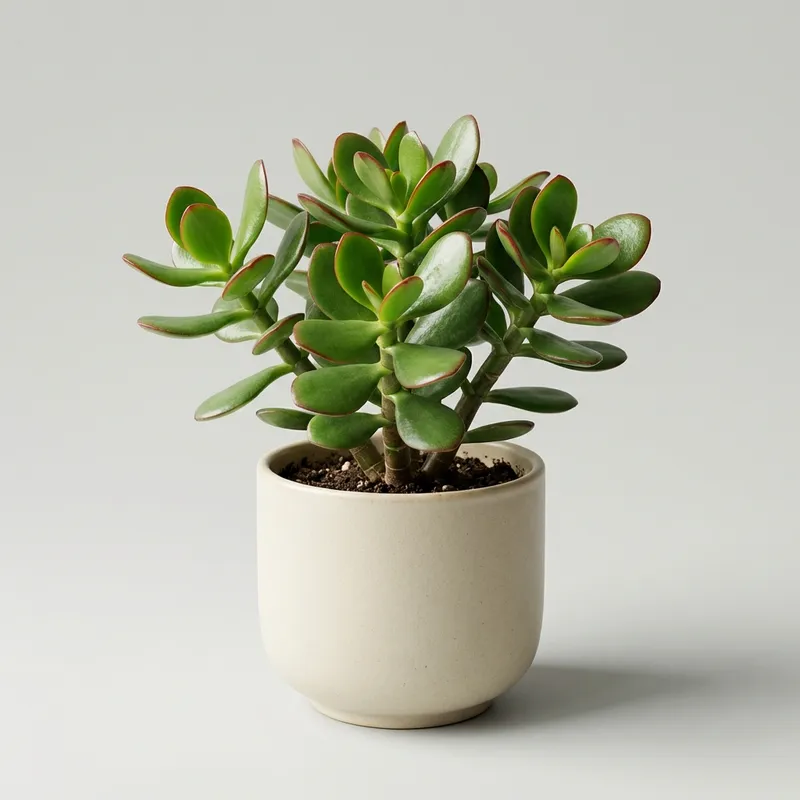
The Jade Plant is a beloved succulent characterized by its thick, woody stems and fleshy, emerald-green leaves. Often associated with good luck and prosperity, these long-lived plants develop a tree-like appearance as they mature, making them a staple in indoor gardening for decades.
Light
Full Sun
Water
Low
Difficulty
Easy
Humidity
Low
Pet Warning
Toxic to dogs, cats, and horses. Ingestion can cause vomiting, lethargy, and a lack of coordination (ataxia).
Care Guide
Jade Plant Care Guide
Lighting
Jade plants thrive in bright, direct light. For optimal growth, place them in a south or west-facing window where they can receive at least 4 to 6 hours of sun daily. If the plant becomes leggy or stretched, it is likely not getting enough light.
Watering
Use the 'soak and dry' method. Allow the potting soil to dry out completely before watering thoroughly. Ensure that excess water drains away to prevent root rot. During the winter dormancy, reduce watering to once every 1-2 months.
Soil and Potting
A well-draining cactus or succulent mix is essential. Avoid standard potting soils that retain too much moisture. Terracotta pots are recommended as they allow the soil to breathe.
Pruning and Maintenance
Prune your jade plant to encourage a bushier, tree-like habit. Pinch off the growing tips or remove entire branches to manage its shape. Always use clean, sharp shears to avoid disease.
Common Issues
- Root Rot: Caused by overwatering. Leaves will turn yellow and mushy.
- Mealybugs: Look for white, cotton-like spots in the leaf joints. Treat with a cotton swab dipped in rubbing alcohol.
- Shriveled Leaves: Indicates the plant is dehydrated and needs more frequent watering.
In-Depth Care & Growth
Feeding & Soil
Fertilizer
Balanced liquid fertilizer (10-10-10) or succulent-specific food
Soil
Well-draining cactus or succulent potting mix with perlite or pumice
Physical Attributes
Mature Size
3 to 6 feet tall indoors
Growth Rate
Slow
Propagation
Stem cuttings, leaf cuttings, or division