Jelly Bean Plant
Sedum rubrotinctum
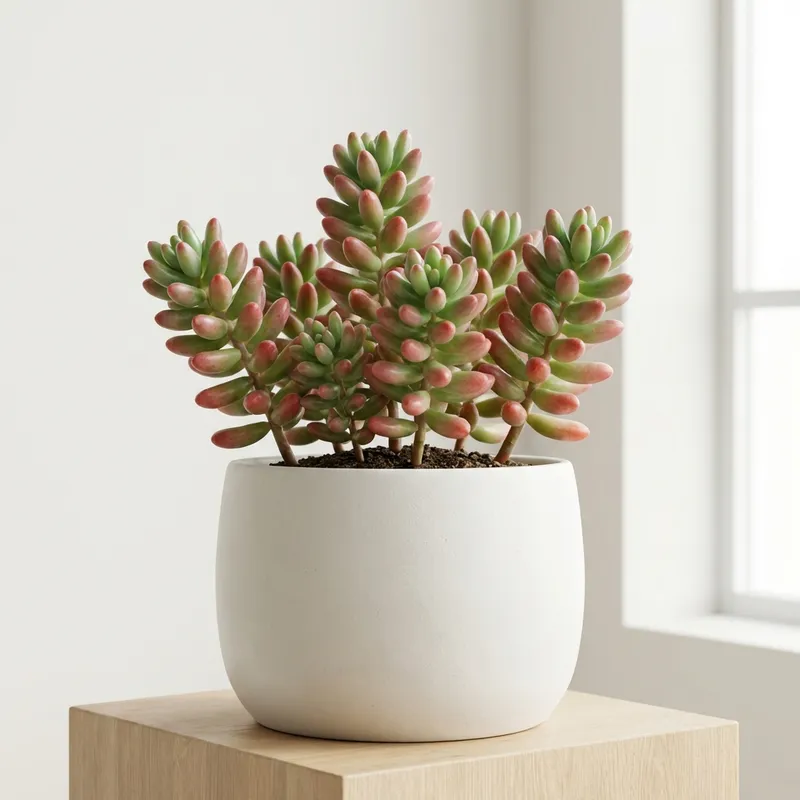
Sedum rubrotinctum, affectionately known as the Jelly Bean Plant or Pork and Beans, is a whimsical succulent native to Mexico. Its plump, jelly bean-shaped leaves grow along sprawling stems, creating a playful and colorful display. The plant is most famous for its 'stress coloring'; while it remains green in lower light, the leaf tips blush into vibrant shades of crimson and bronze when given plenty of bright sunlight. It is a resilient and low-maintenance addition to any succulent collection, perfect for rocky gardens or sunny windowsills.
Light
Full Sun
Water
Low
Difficulty
Easy
Humidity
Low
Pet Warning
The Jelly Bean Plant is considered toxic to cats, dogs, and horses if ingested. It can cause vomiting, diarrhea, and lethargy. Additionally, the sap contains calcium oxalate crystals which can cause mild skin irritation for some humans.
Care Guide
Sedum rubrotinctum Care Guide
Light
To maintain the iconic 'jelly bean' colors, provide at least 6 hours of direct sunlight daily. In insufficient light, the plant may become 'leggy' (etiolated), where the stems stretch toward the light and the leaves lose their vibrant red tint.
Watering
Use the 'soak and dry' method. Water deeply until water runs out the drainage holes, then allow the soil to dry out completely before watering again. During the winter dormancy, reduce watering significantly, only providing enough to prevent the leaves from shriveling.
Soil & Potting
Use a well-draining cactus or succulent potting mix. A terracotta pot is highly recommended as its porous nature helps moisture evaporate, preventing soil from staying soggy. Ensure the pot has adequate drainage holes.
Temperature
This plant thrives in temperatures between 60°F and 80°F (15°C - 27°C). It is not frost-tolerant; if kept outdoors, bring it inside if temperatures are forecasted to drop below 40°F (4°C).
Common Issues
- Leaf Drop: Leaves fall off very easily if bumped; this is a natural propagation strategy. However, excessive dropping can indicate overwatering.
- Shriveling: This is a clear sign that the plant is thirsty and its water reserves are depleted.
- Mushy Stems: A sign of root rot, typically caused by sitting in waterlogged soil.
In-Depth Care & Growth
Feeding & Soil
Fertilizer
Balanced liquid succulent fertilizer diluted to half-strength
Soil
Well-draining cactus or succulent mix with added perlite or grit
Physical Attributes
Mature Size
8-12 inches tall, spreading up to 12-18 inches wide
Growth Rate
Moderate
Propagation
Leaf cuttings, stem cuttings, or division