
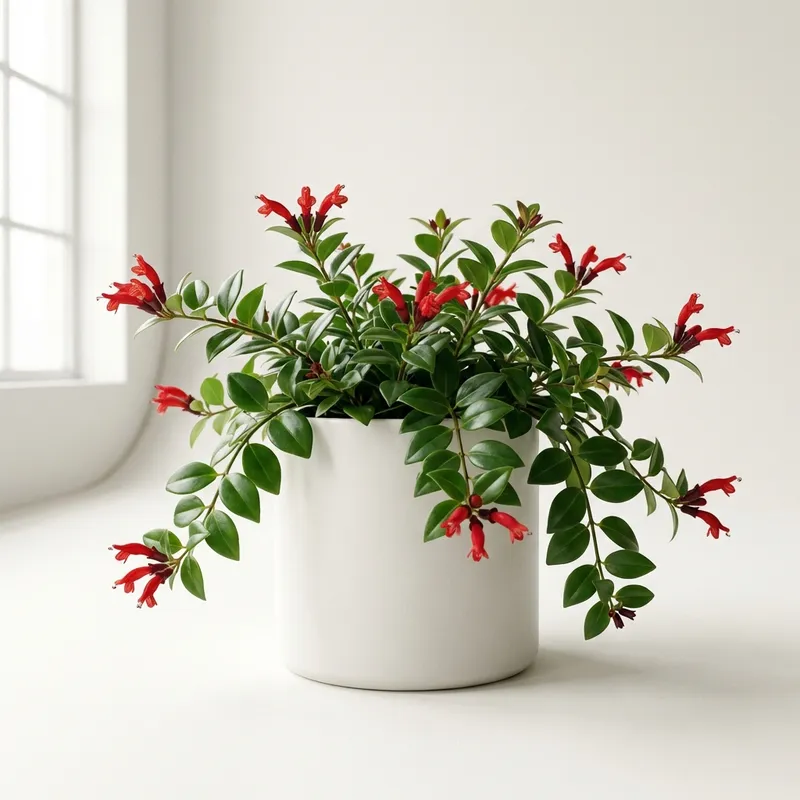
Lipstick Plant
Aeschynanthus radicans
The Lipstick Plant is a captivating epiphytic tropical perennial prized for its unique, tubular flowers that emerge from dark burgundy calyxes, bearing a striking resemblance to a tube of lipstick. Native to the humid rainforests of Southeast Asia, this plant boasts trailing vines covered in thick, glossy, emerald-green leaves. Its cascading growth habit makes it an exceptional specimen for hanging containers where its vibrant red blooms can be showcased prominently.
Light
Bright Indirect
Water
Moderate
Difficulty
Moderate
Humidity
High
Pet Friendly
Aeschynanthus radicans is considered non-toxic to cats, dogs, and horses, making it a safe choice for households with curious pets.
Care Guide
Light and Placement Ensure your Lipstick Plant receives plenty of bright, filtered light. While it can tolerate some morning sun, direct afternoon rays will scorch the leaves. Insufficient light is the most common reason for a lack of blooms. ### Watering Strategy Keep the soil consistently moist but not soggy. Water when the top inch of soil feels dry. During the winter months, allow the soil to dry out a bit more between waterings to prevent root rot. ### Humidity and Temperature Native to tropical regions, this plant thrives in high humidity (above 50%). Use a pebble tray or humidifier if your indoor air is dry. Maintain temperatures between 65F and 85F; temperatures below 60F can cause sudden leaf drop. ### Seasonal Tips During the winter, the plant enters a dormant phase; reduce watering and avoid fertilizing until new growth appears in spring. ### Pruning and Common Issues After the flowering cycle, prune back the stems to encourage bushier growth. Watch for common pests like mealybugs or aphids, and ensure good air circulation to prevent fungal issues.
In-Depth Care & Growth
Feeding & Soil
Fertilizer
Balanced liquid fertilizer or high-phosphorous bloom booster
Soil
An airy, well-draining mix such as an orchid-based substrate or a blend of peat moss, perlite, and pine bark.
Physical Attributes
Mature Size
Stems can reach 2 to 3 feet in length
Growth Rate
Moderate
Propagation
Stem cuttings are the most effective method; take 4-inch cuttings in spring and root them in moist soil or water.