Ming Fern
Asparagus retrofractus
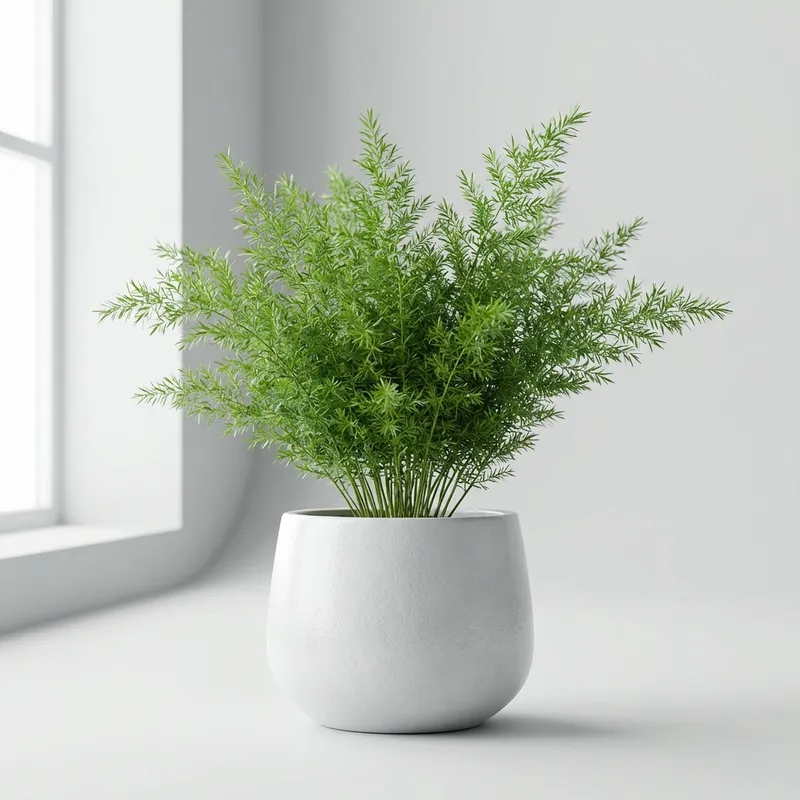
The Ming Fern is a stunning evergreen perennial that, despite its name, is a member of the lily family rather than a true fern. It is beloved for its zig-zagging woody stems and soft, needle-like foliage that grows in dense, tufted clusters, creating a cloud-like or pom-pom appearance. This plant adds a unique architectural texture to any indoor space, reminiscent of a miniature ancient forest or a delicate bonsai.
Light
Bright Indirect
Water
Moderate
Difficulty
Moderate
Humidity
Moderate
Pet Warning
Asparagus ferns contain sapogenins that are toxic to cats and dogs. Ingestion can cause gastrointestinal distress including vomiting and diarrhea. Repeated skin contact with the sap can also cause allergic dermatitis.
Care Guide
Light
Provide bright, indirect sunlight for at least 6 hours a day. While it can tolerate lower light, the foliage may become sparse and leggy. Avoid direct afternoon sun which can scorch the delicate needles.
Watering
Keep the soil consistently moist but not waterlogged. Water when the top inch of soil feels dry to the touch. The plant uses its tuberous roots to store water, so it can survive brief periods of drought, but frequent drying will lead to yellowing.
Humidity and Temperature
Ming Ferns thrive in humidity levels between 40-60%. Use a pebble tray or humidifier if your home is dry, especially during winter months. Maintain temperatures between 60°F and 75°F (15°C-24°C) and avoid placing it near cold drafts or heating vents.
Pruning and Maintenance
Prune back old, brown, or yellowing stems at the base to encourage fresh growth and maintain its bushy shape. Be careful when handling as mature stems may develop small, sharp spines.
Seasonal Care
In winter, growth slows down significantly. Reduce watering frequency and stop fertilization until new growth appears in the spring.
In-Depth Care & Growth
Feeding & Soil
Fertilizer
Balanced liquid houseplant fertilizer
Soil
A rich, well-draining potting mix. A blend of peat moss or coco coir with perlite is ideal to retain moisture while ensuring drainage.
Physical Attributes
Mature Size
3 to 6 feet tall
Growth Rate
Moderate
Propagation
Root division is the most effective method, best performed during repotting in spring. It can also be grown from seeds found in its small berries.