
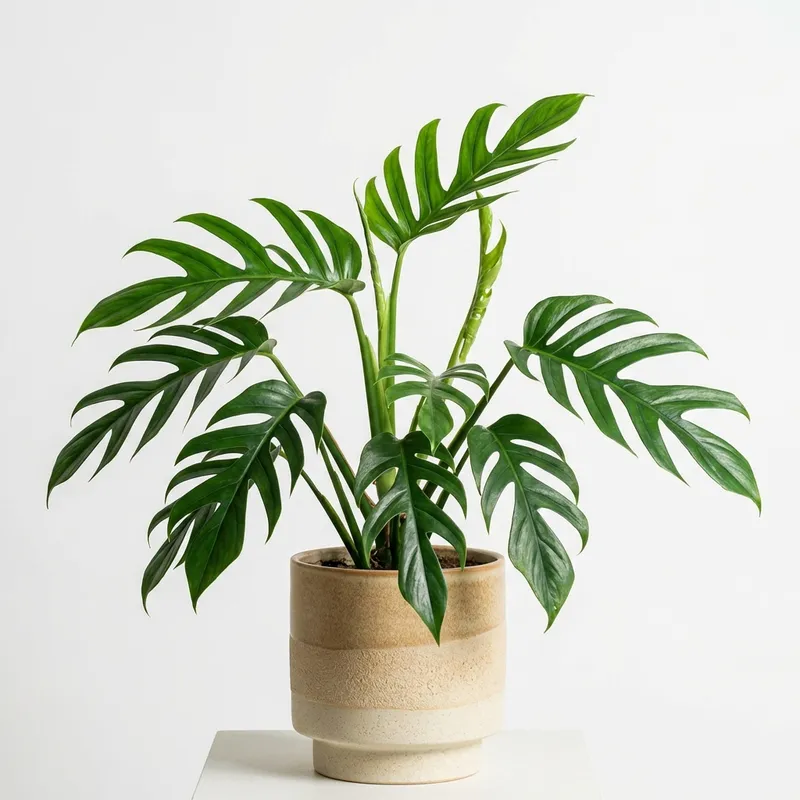
Monstera 'Burle Marx Flame'
Monstera sp. 'Burle Marx Flame'
The Monstera 'Burle Marx Flame' is a legendary aroid coveted for its architectural beauty and dramatic, deeply fenestrated leaves. Unlike the broad leaves of a typical deliciosa, this specimen features narrow, finger-like lobes that curve upwards like flickering flames. It is a slow-growing climber that transforms any space into a tropical gallery, making it a crown jewel for serious rare plant collectors.
Light
Bright Indirect
Water
Moderate
Difficulty
Moderate
Humidity
High
Pet Warning
Contains insoluble calcium oxalate crystals which can cause oral irritation, swelling, and digestive distress if ingested by pets or humans.
Care Guide
Monstera 'Burle Marx Flame' Care Guide
Light
Provide bright, filtered light. Avoid direct afternoon sun which can scorch the delicate foliage. An east or north-facing window is ideal.
Watering
Water when the top 1-2 inches of soil feel dry. This plant is sensitive to overwatering; ensure the pot has excellent drainage. Reduce watering during winter months.
Humidity & Temperature
Maintain humidity levels above 60% for optimal growth. Temperatures should remain between 65°F and 85°F (18°C - 29°C). Avoid cold drafts or placement near heaters.
Support
As a climbing hemiepiphyte, providing a moss pole or cedar plank is essential for encouraging larger leaf production and supporting its vertical growth.
Common Issues
Yellow leaves often indicate overwatering, while crispy brown edges suggest low humidity. Watch for common pests like spider mites or thrips.
In-Depth Care & Growth
Feeding & Soil
Fertilizer
Balanced liquid foliage fertilizer
Soil
A chunky aroid mix composed of orchid bark, perlite, horticultural charcoal, and coco coir for maximum aeration.
Physical Attributes
Mature Size
2 to 4 feet tall indoors
Growth Rate
Slow
Propagation
Stem cuttings with at least one node, preferably rooted in sphagnum moss or perlite.