Monstera esqueleto
Monstera esqueleto
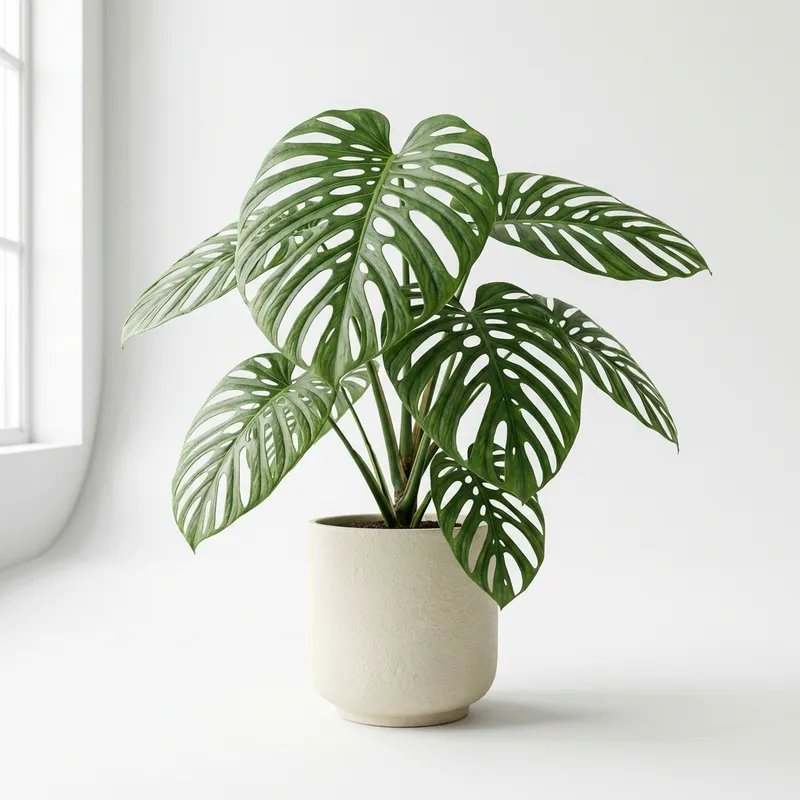
Monstera esqueleto is a breathtaking tropical aroid native to the cloud forests of Costa Rica. It is renowned for its large, leathery leaves that exhibit dramatic, oversized fenestrations, often appearing more like a delicate skeleton than a solid leaf. While frequently confused with its smaller relative, Monstera adansonii, the esqueleto boasts much larger foliage, a more deeply textured surface, and a unique growth habit that rewards indoor gardeners with an architectural centerpiece as it matures.
Light
Bright Indirect
Water
Moderate
Difficulty
Moderate
Humidity
High
Pet Warning
Contains insoluble calcium oxalate crystals which can cause oral irritation, swelling of the mouth and throat, and digestive distress in cats, dogs, and humans if ingested.
Care Guide
Lighting
Place your Monstera esqueleto in a spot that receives 6 to 8 hours of bright, filtered sunlight. Avoid direct midday sun, as the thin leaf tissue between the fenestrations can scorch easily.
Watering and Soil
Use a well-draining, chunky aroid mix consisting of orchid bark, perlite, and coco coir. Water thoroughly when the top two inches of soil feel dry. Ensure the pot has drainage holes to prevent water from sitting at the roots.
Humidity and Temperature
This species thrives in high humidity (60% or higher). If your home is dry, use a humidifier or place the plant in a naturally humid room like a bathroom with a window. Keep temperatures between 65°F and 85°F (18°C - 29°C).
Support
As a hemiepiphytic climber, the esqueleto needs a moss pole or sturdy cedar plank to thrive. Providing vertical support encourages the plant to produce larger, more mature leaves with more complex fenestrations.
Troubleshooting
- Yellowing leaves: Often a sign of overwatering or poor drainage.
- Brown, crispy edges: Usually indicates low humidity or underwatering.
- Small leaves: Likely due to insufficient light or lack of vertical support.
In-Depth Care & Growth
Feeding & Soil
Fertilizer
Balanced liquid foliage fertilizer
Soil
Chunky aroid mix with orchid bark, perlite, and peat or coco coir
Physical Attributes
Mature Size
6 to 10 feet tall indoors
Growth Rate
Moderate
Propagation
Stem cuttings with at least one node rooted in water, sphagnum moss, or perlite