Monstera obliqua
Monstera obliqua
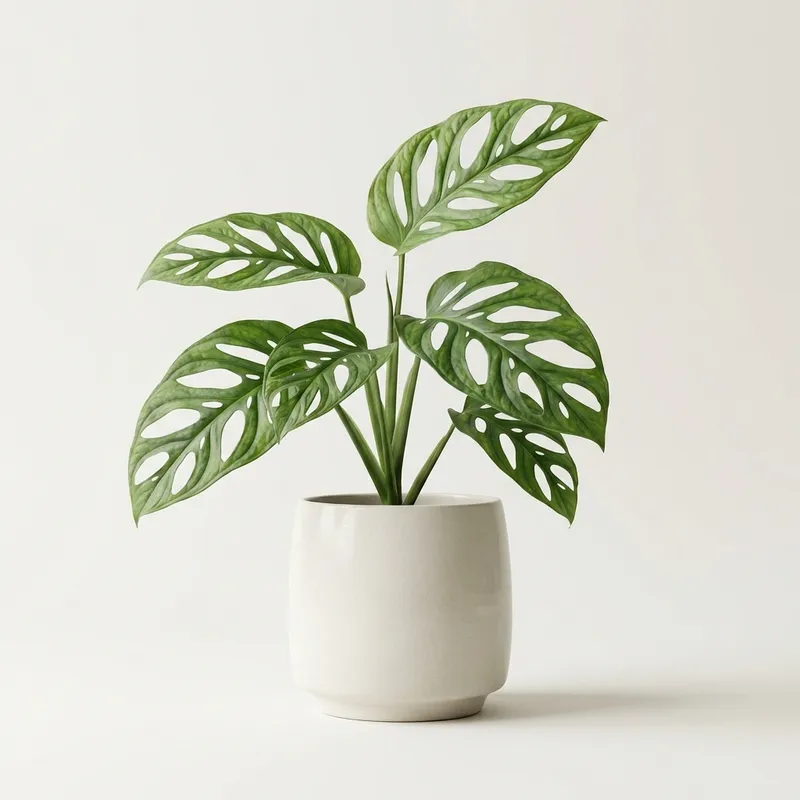
Often referred to as the 'holy grail' of aroids, the Monstera obliqua is a rare and elusive species known for its exceptionally thin, paper-like leaves. What makes this plant so distinct is its extreme fenestration; in mature specimens, the holes can account for up to 90% of the leaf surface, leaving only a delicate, lace-like skeleton of green. It is a slow-growing climber that is frequently confused with the more common Monstera adansonii, though the true obliqua is significantly more fragile and difficult to cultivate.
Light
Bright Indirect
Water
Moderate
Difficulty
Difficult
Humidity
High
Pet Warning
Like most members of the Araceae family, this plant contains insoluble calcium oxalate crystals. Ingestion can cause severe mouth irritation, swelling of the throat, and digestive distress in cats, dogs, and humans.
Care Guide
Monstera obliqua Care Guide Humidity is Mandatory: This plant requires a minimum of 80% humidity to survive. Without it, the paper-thin leaves will quickly crisp and turn brown. A dedicated humidifier or a glass greenhouse cabinet is highly recommended. Light Conditions: Place in bright, filtered indirect light. Avoid any direct sunlight, as the delicate foliage will scorch almost instantly. Conversely, too little light will stop its already slow growth. Watering Protocol: Keep the substrate consistently moist but never soggy. Use distilled or rainwater if possible to avoid mineral buildup. Check the moisture daily; the thin leaves do not store water well. Substrate & Support: Use an extremely airy, chunky mix consisting of orchid bark, perlite, horticultural charcoal, and a small amount of sphagnum moss. Provide a high-quality moss pole for the aerial roots to climb, which is essential for leaf development. Pest Management: Be on high alert for spider mites, which are attracted to the plant's thin leaves, especially if humidity levels drop.
In-Depth Care & Growth
Feeding & Soil
Fertilizer
Balanced liquid aroid fertilizer
Soil
Well-draining chunky aroid mix with high aeration.
Physical Attributes
Mature Size
Vines can reach 10-15 feet in the wild, but usually remain 2-4 feet in indoor cultivation.
Growth Rate
Slow
Propagation
Stem cuttings with at least one node, air layering, or stolon (runner) propagation.