Philodendron gloriosum
Philodendron gloriosum
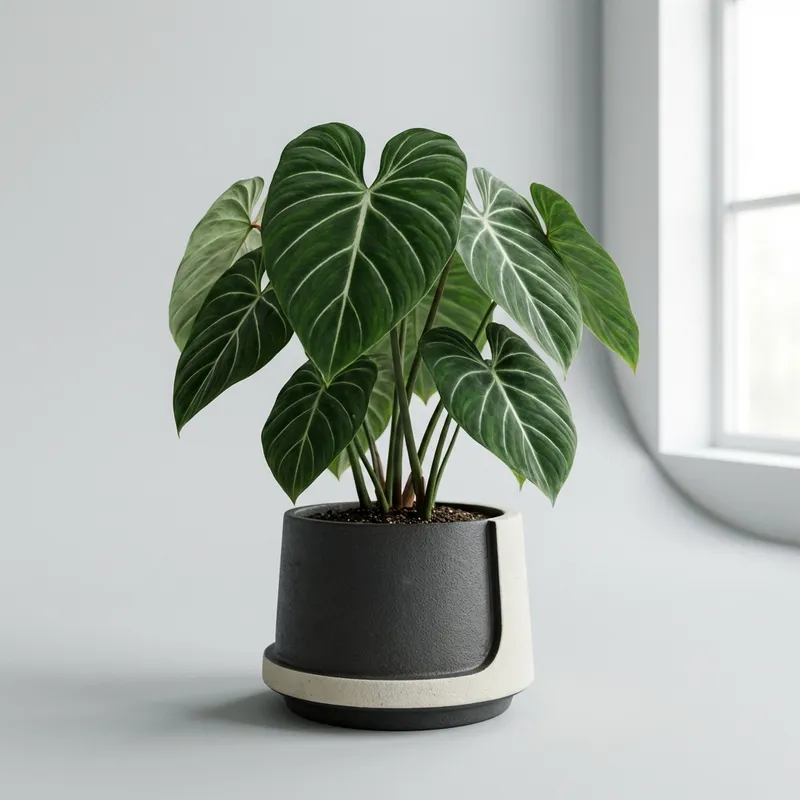
The Philodendron gloriosum is a breathtaking terrestrial aroid native to the tropical rainforests of Colombia. Unlike its climbing relatives, this species crawls across the forest floor. It is most famous for its massive, heart-shaped leaves that feature a velvety texture and deep green hue, accentuated by dramatic, contrasting white veins. This plant is a true showstopper for indoor gardens, offering an architectural elegance that few other foliage plants can match.
Light
Bright Indirect
Water
Moderate
Difficulty
Moderate
Humidity
High
Pet Warning
Contains calcium oxalate crystals which are toxic to cats, dogs, and humans if ingested. Causes mouth irritation, swelling, and digestive distress.
Care Guide
Philodendron gloriosum Care Guide
Potting & Soil
As a terrestrial crawler, use a rectangular or long planter to allow the rhizome to spread. Plant in a chunky, well-draining aroid mix containing orchid bark, perlite, and horticultural charcoal. Ensure the top half of the rhizome is exposed above the soil to prevent rot.
Light & Placement
Place in bright, indirect light. Avoid direct sunlight which can scorch the velvety leaves. A north or east-facing window is often ideal.
Watering
Water when the top 1-2 inches of soil feel dry. They prefer consistent moisture but are prone to root rot if left in standing water.
Temperature & Humidity
Keep temperatures between 65-85°F (18-29°C). Maintain humidity levels above 60% for optimal leaf health.
Seasonal Tips
In winter, growth slows down significantly. Reduce watering frequency and ensure the plant is away from cold drafts or heaters.
In-Depth Care & Growth
Feeding & Soil
Fertilizer
Balanced liquid fertilizer (20-20-20) diluted to half strength
Soil
Aroid mix consisting of orchid bark, perlite, peat moss or coco coir, and charcoal.
Physical Attributes
Mature Size
Leaves can grow up to 3 feet in width; plant can spread 4-5 feet horizontally.
Growth Rate
Slow
Propagation
Rhizome division or stem cuttings with at least one node and a leaf.