
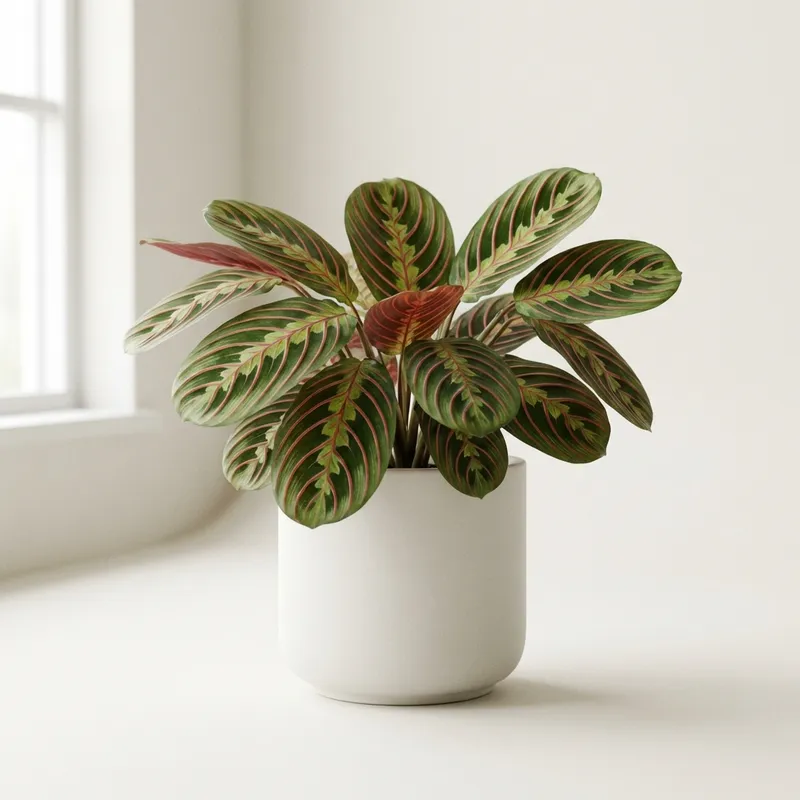
Prayer Plant
Maranta leuconeura
The Maranta leuconeura, commonly known as the Prayer Plant, is a stunning tropical perennial celebrated for its striking foliage and unique circadian rhythm. Its leaves, which feature intricate patterns of dark green spots or red veins, fold upward at night like hands in prayer, a phenomenon known as nyctinasty. Native to the Brazilian rainforest floor, this plant adds dynamic movement and vibrant texture to indoor plant collections.
Light
Bright Indirect
Water
Moderate
Difficulty
Moderate
Humidity
High
Pet Friendly
The Maranta leuconeura is non-toxic to cats, dogs, and horses, making it a safe choice for pet-owning households.
Care Guide
Prayer Plant Care Guide
Light Requirements
Place your Maranta in bright, indirect sunlight. Avoid direct sun, as it can scorch the delicate leaves and cause the colors to fade. It can tolerate lower light levels, but its patterns may become less distinct.
Watering and Water Quality
Keep the soil consistently moist but not waterlogged. Marantas are very sensitive to fluoride and salts found in tap water; for best results, use distilled water, rainwater, or filtered water.
Humidity and Temperature
Being a tropical plant, it thrives in high humidity (above 50%). Mist the leaves regularly, use a pebble tray, or place a humidifier nearby. Maintain temperatures between 65-80°F (18-27°C).
Soil and Potting
Use a well-draining, peat-based potting mix with added perlite or coco coir to ensure aeration while retaining necessary moisture.
Common Issues
- Brown Edges: Usually caused by low humidity or tap water sensitivity.
- Yellow Leaves: Often a sign of overwatering or poor drainage.
- Pests: Keep an eye out for spider mites, which thrive in dry conditions.
In-Depth Care & Growth
Feeding & Soil
Fertilizer
Balanced, water-soluble houseplant fertilizer (10-10-10)
Soil
Rich, peat-based, well-draining potting soil
Physical Attributes
Mature Size
12 inches tall, 12-18 inches wide
Growth Rate
Moderate
Propagation
Stem cuttings taken just below a node or division of the root ball during repotting.