Rhaphidophora hayi
Rhaphidophora hayi
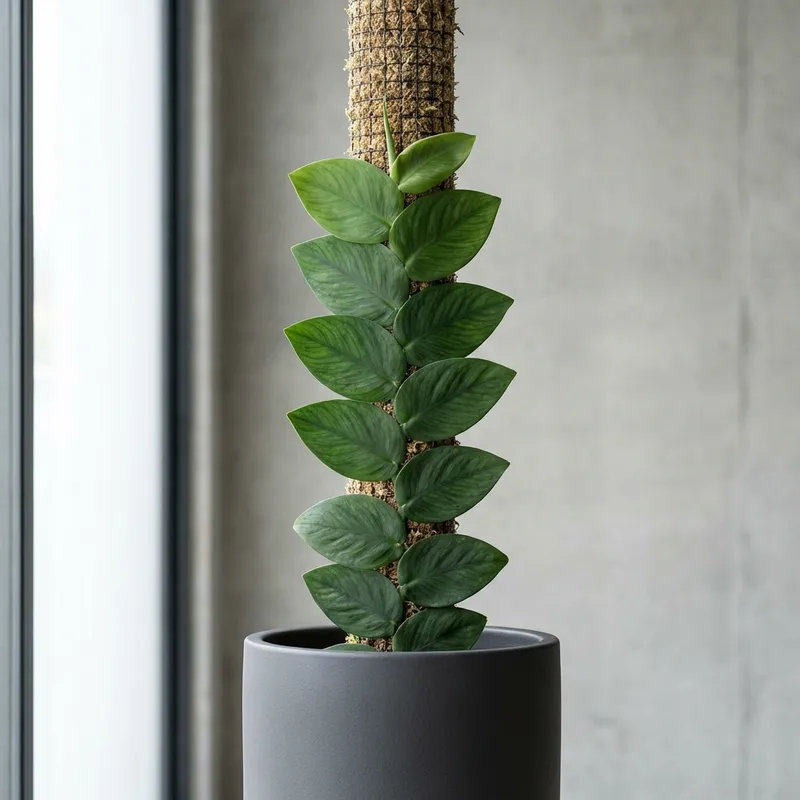
Rhaphidophora hayi is a captivating tropical aroid celebrated for its unique growth habit known as 'shingling'. In its natural habitat, this climber attaches itself firmly to tree trunks, with its heart-shaped, deep green leaves pressing flat against the surface in a tight, overlapping pattern. This architectural foliage creates a living green wall effect, making it a sought-after specimen for indoor gardeners looking for something structurally distinct and vertically oriented.
Light
Bright Indirect
Water
Moderate
Difficulty
Moderate
Humidity
High
Pet Warning
Like most members of the Araceae family, this plant contains insoluble calcium oxalate crystals. If ingested, it can cause significant oral irritation, swelling of the mouth, tongue, and throat, and digestive distress in cats, dogs, and humans.
Care Guide
Care Guide for Rhaphidophora hayi
Mounting and Support
Unlike many other climbers, Rhaphidophora hayi requires a flat surface to exhibit its signature shingling behavior. Provide a wooden plank, a piece of cork bark, or a flat moss pole. Initially, you may need to secure the vine with floral tape or twine; eventually, its aerial roots will latch onto the support autonomously.
Watering and Feeding
Keep the potting medium consistently moist but not waterlogged. Allow the top inch of soil to dry out before watering again. Because it grows on a support, misting the mounting surface can help provide moisture to the aerial roots. Feed with a diluted balanced fertilizer once a month in the growing season.
Light and Temperature
This plant thrives in bright, filtered light. Direct afternoon sun will scorch the leaves, while too little light will cause the plant to 'reach' with long, leafless stems. It prefers warm temperatures between 65°F and 85°F (18°C-29°C).
Humidity Management
As a native of rainforests, it requires high humidity (60% or higher). Use a humidifier or a pebble tray to maintain moisture levels, especially if your indoor air is dry during the winter.
Troubleshooting
If leaves begin to pull away from the support, it may be a sign of low humidity or a lack of light. Keep an eye out for spider mites, which can occur if the environment is too dry.
In-Depth Care & Growth
Feeding & Soil
Fertilizer
Balanced liquid fertilizer
Soil
A chunky, well-draining aroid mix consisting of orchid bark, perlite, and coco coir.
Physical Attributes
Mature Size
5 to 10 feet tall indoors with proper support
Growth Rate
Moderate
Propagation
Stem cuttings with at least one node, preferably rooted in moist sphagnum moss or water.