
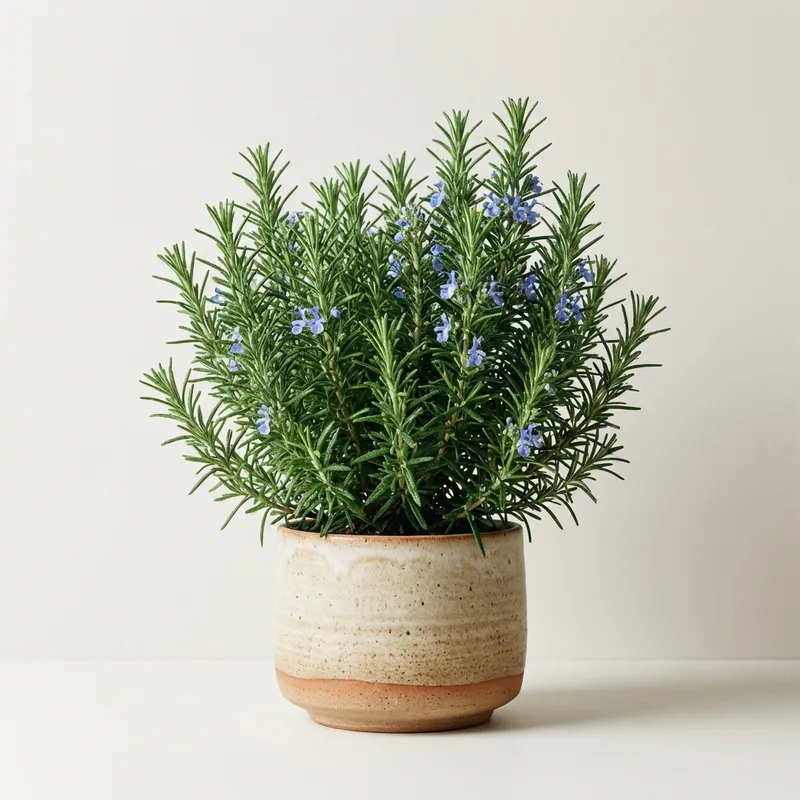
Rosemary
Rosmarinus officinalis
Rosemary is a hardy, aromatic evergreen shrub with needle-like leaves and a distinct, woody fragrance. Native to the Mediterranean, it is highly valued for its culinary uses, medicinal properties, and its ability to thrive in sunny, dry conditions as an ornamental plant.
Light
Full Sun
Water
Low
Difficulty
Moderate
Humidity
Low
Pet Friendly
Rosemary is non-toxic to cats and dogs according to the ASPCA. It is safe for culinary use around pets in small quantities.
Care Guide
Rosemary Care Guide
Light Requirements Rosemary thrives in full sun. It needs at least 6 to 8 hours of direct sunlight daily. If growing indoors, a south-facing window is ideal, and supplemental grow lights may be necessary during winter months.
Watering and Drainage This plant is drought-tolerant once established but needs consistent watering while young. Allow the top two inches of soil to dry out completely before watering again. Overwatering or poor drainage will quickly lead to root rot.
Soil and Potting Use a well-draining, sandy or gravelly soil mix with a neutral pH. If potting, ensure the container has large drainage holes. Terracotta pots are excellent for rosemary as they allow the soil to breathe.
Temperature and Airflow Rosemary prefers warm temperatures and low humidity. Crucially, it requires excellent air circulation to prevent powdery mildew and other fungal issues. Avoid placing it in humid rooms like bathrooms or crowded clusters of plants.
Pruning and Harvesting Prune regularly to maintain shape and encourage new growth. You can harvest sprigs at any time, but avoid cutting more than one-third of the plant's foliage at once. Pruning the woody stems in early spring helps rejuvenate the plant.
In-Depth Care & Growth
Feeding & Soil
Fertilizer
Organic balanced fertilizer or fish emulsion
Soil
Sandy, well-draining soil with a neutral to slightly alkaline pH
Physical Attributes
Mature Size
2-4 feet tall and wide indoors; up to 6 feet in the garden
Growth Rate
Moderate
Propagation
Stem cuttings (best), layering, or seeds (slower and less reliable)