
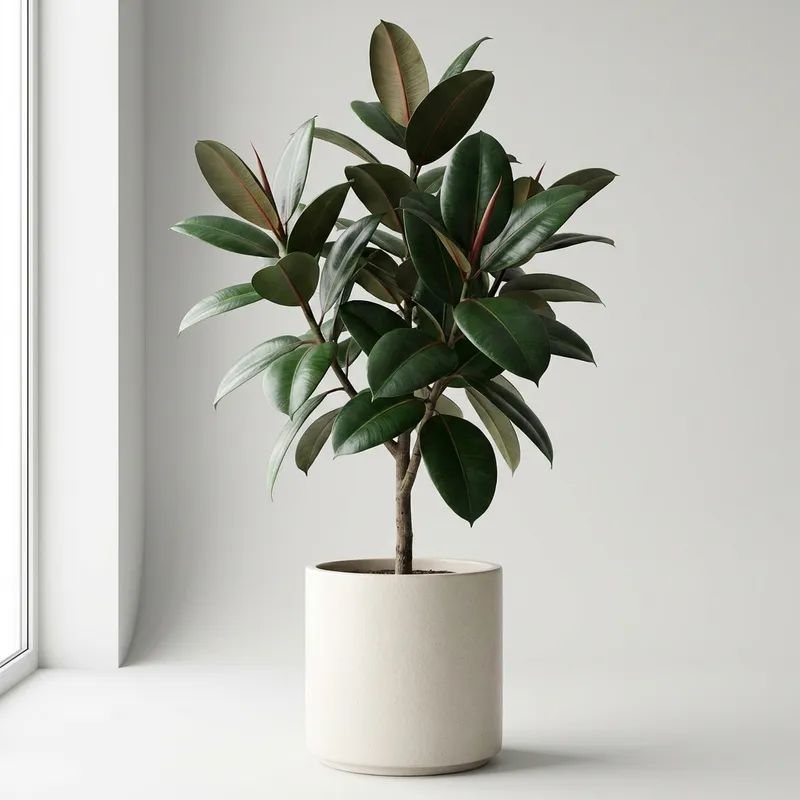
Rubber Plant
Ficus elastica
The Rubber Plant is a striking architectural houseplant known for its large, leathery, and high-gloss leaves. Native to the tropical regions of Southeast Asia, it can grow into a massive tree in the wild, but indoors it serves as a sophisticated focal point, reaching impressive heights while remaining relatively low-maintenance.
Light
Bright Indirect
Water
Moderate
Difficulty
Easy
Humidity
Moderate
Pet Warning
The plant contains a milky latex sap that is toxic to dogs, cats, and horses if ingested. It can also cause skin irritation (dermatitis) in humans upon contact.
Care Guide
Rubber Plant Care Guide
Light
Provide bright, indirect sunlight for optimal growth. While it can tolerate lower light, the plant may become leggy and lose its luster. Avoid direct afternoon sun, which can scorch the thick leaves.
Watering
Water when the top 50-75% of the soil is dry. Soak the soil thoroughly until water drains from the bottom, then discard excess water. Overwatering is the most common cause of leaf drop.
Humidity and Temperature
Maintains best growth in temperatures between 60°F and 85°F. It prefers moderate humidity but adapts well to average home conditions. Use a pebble tray or humidifier if the air is exceptionally dry.
Foliage Maintenance
Due to the large surface area of the leaves, they tend to collect dust. Wipe the leaves regularly with a damp cloth to ensure the plant can photosynthesize efficiently.
Pruning
Prune in the spring to control size or encourage branching. Note that the plant will bleed a milky white sap when cut, which can be messy and irritating to skin.
Troubleshooting
- Bottom leaves falling off: Often caused by overwatering or cold drafts.
- Pale new leaves: Typically a sign of nutrient deficiency or insufficient light.
In-Depth Care & Growth
Feeding & Soil
Fertilizer
Balanced 10-10-10 water-soluble fertilizer
Soil
A well-draining, aerated potting mix containing peat moss, pine bark, and perlite.
Physical Attributes
Mature Size
6 to 10 feet (indoors)
Growth Rate
Fast
Propagation
Stem cuttings or air layering.