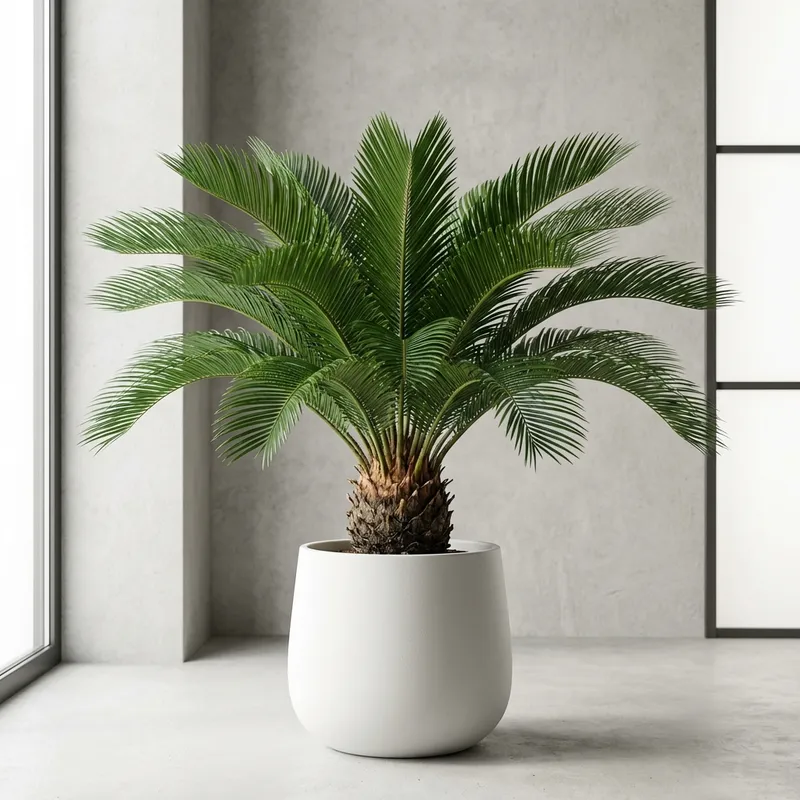
Sago Palm
Cycas revoluta
A striking, prehistoric-looking plant that is actually a cycad rather than a true palm. It features stiff, feathery dark green fronds that grow in a symmetrical rosette pattern, emerging from a thick, shaggy trunk. Known for its incredible longevity and slow growth, it serves as a bold architectural statement in bright indoor spaces.
Light
Bright Indirect
Water
Low
Difficulty
Easy
Humidity
Moderate
Pet Warning
Extremely toxic to humans and pets. All parts of the plant contain cycasin, which causes severe liver damage and can be fatal if ingested. The seeds (nuts) contain the highest concentration of toxins.
Care Guide
Sago Palm Care Guide ## Light Placement: Provide bright, indirect light. While they can tolerate some direct morning sun, harsh afternoon rays may scorch the stiff fronds. Rotate the pot occasionally to ensure even growth. ## Watering Protocol: These plants are drought-tolerant and highly susceptible to root rot. Allow the soil to dry out almost completely between waterings. During winter dormancy, reduce watering significantly. ## Soil and Drainage: Use a well-draining cactus or succulent potting mix. Ensure the container has ample drainage holes. ## Temperature: Prefers consistent temperatures between 65 and 75 degrees Fahrenheit. Avoid placing near cold drafts or heating vents. ## Common Issues: Yellowing leaves are often a sign of overwatering or a lack of nutrients like magnesium. If the center of the plant turns mushy, it is likely suffering from rot.
In-Depth Care & Growth
Feeding & Soil
Fertilizer
Slow-release palm fertilizer or a balanced liquid houseplant food
Soil
Well-draining, sandy or loamy potting medium.
Physical Attributes
Mature Size
3 to 10 feet tall
Growth Rate
Slow
Propagation
Division of offsets (pups) or germination of seeds.