
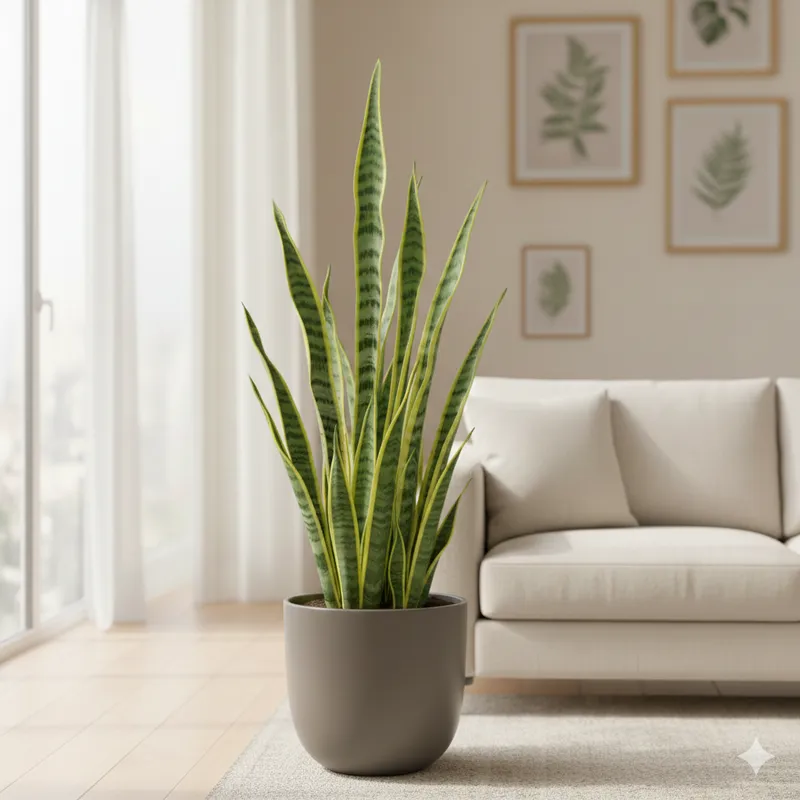
Snake Plant
Dracaena trifasciata
An incredibly resilient and architecturally striking plant known for its upright, sword-like leaves. It is a staple in interior design due to its ability to thrive on neglect and its air-purifying qualities, specifically its ability to convert carbon dioxide into oxygen at night.
Light
Low
Water
Low
Difficulty
Easy
Humidity
Low
Pet Warning
Toxic to cats and dogs if ingested. Contains saponins which can cause nausea, vomiting, and diarrhea.
Care Guide
Snake Plant Care Guide
1. Lighting While it thrives in bright indirect light, it is famous for surviving in low-light corners of the home. Avoid direct hot sun which can scorch the leaves.
2. Watering Allow the soil to dry out completely between waterings. Overwatering is the most common cause of failure; when in doubt, wait a week. In winter, water only once every 6-8 weeks.
3. Soil & Potting Use a well-draining potting mix, such as a cactus or succulent blend. Ensure the pot has substantial drainage holes to prevent standing water.
4. Temperature Maintain temperatures between 60°F and 85°F (15°C - 30°C). Keep away from cold drafts and air conditioning vents.
5. Common Issues
- Mushy leaves: Sign of root rot from overwatering. Remove affected leaves and reduce watering.
- Wrinkled leaves: Indicates the plant is severely dehydrated.
- Leaning leaves: Usually caused by insufficient light or incorrect watering.
In-Depth Care & Growth
Feeding & Soil
Fertilizer
Balanced liquid fertilizer
Soil
Well-draining, sandy potting mix or cactus/succulent soil.
Physical Attributes
Mature Size
1 to 4 feet tall
Growth Rate
Slow
Propagation
Division of rhizomes or leaf cuttings.