String of Turtles
Peperomia prostrata
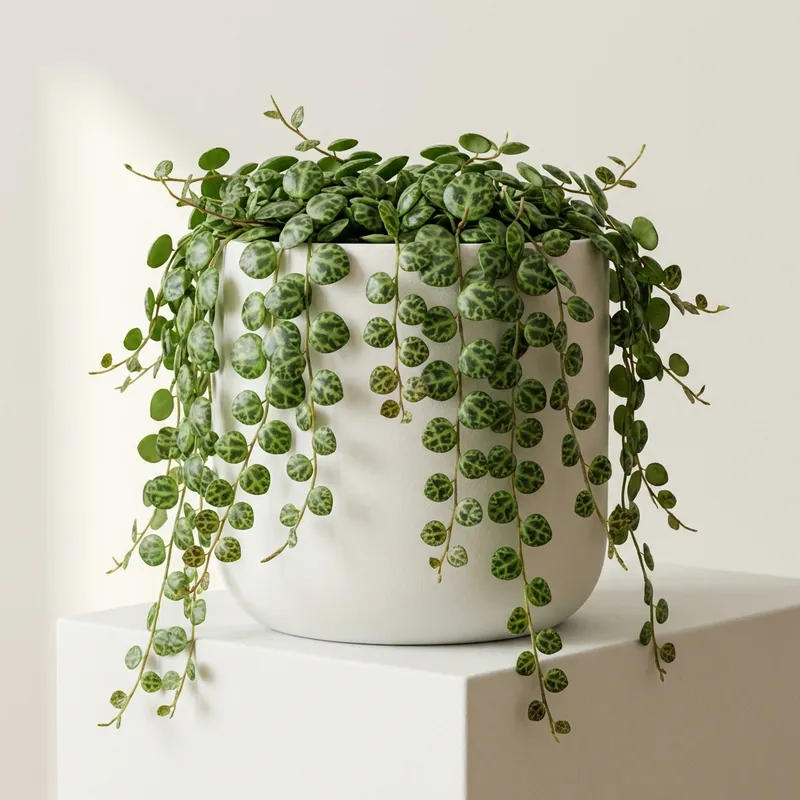
Peperomia prostrata, widely known as the String of Turtles, is a dainty, slow-growing succulent-like plant native to the rainforests of Brazil. It is highly sought after for its tiny, succulent, orbicular leaves that cascade beautifully from hanging pots. Each leaf features a mesmerizing pattern of white and silvery-green veins that mimic the shell of a turtle, turning a darker green and eventually reddish-brown as the plant matures. As an epiphyte, it naturally grows on trees and moss, making it a perfect candidate for terrariums or small shelf displays.
Light
Bright Indirect
Water
Moderate
Difficulty
Moderate
Humidity
Moderate
Pet Friendly
This plant is non-toxic to cats, dogs, and horses, making it an excellent choice for pet-filled homes.
Care Guide
Care Guide for Peperomia prostrata
Lighting
String of Turtles thrives in bright, indirect sunlight. Direct sun can easily burn the delicate, fleshy leaves. If the plant is not receiving enough light, the patterns on the leaves will become less distinct.
Water
Allow the top 1-2 inches of soil to dry out between waterings. Because it is a semi-succulent, it is very sensitive to overwatering which leads to root rot. When in doubt, it is safer to underwater than to overwater.
Temperature and Humidity
Maintain temperatures between 65°F and 75°F (18°C-24°C). This plant prefers moderate to high humidity; if your home is dry, consider a pebble tray or a humidifier to keep the leaves lush.
Soil and Potting
Use a well-draining mix such as a peat-based potting soil combined with perlite or orchid bark. These plants have shallow root systems and do not require frequent repotting; they actually prefer to be slightly root-bound.
Propagation
Propagation is simple using stem cuttings. Simply place a few leaf-bearing stems on top of moist soil and they will eventually root from the nodes.
Seasonal Tips
In the winter, growth will slow significantly. Reduce watering frequency and cease fertilization until the following spring.
In-Depth Care & Growth
Feeding & Soil
Fertilizer
Liquid balanced fertilizer (10-10-10) diluted to half-strength
Soil
Well-draining, airy mix such as peat moss mixed with perlite and orchid bark.
Physical Attributes
Mature Size
Vines can reach 12 inches in length
Growth Rate
Moderate
Propagation
Stem cuttings, leaf cuttings, or layering.