Ti Plant
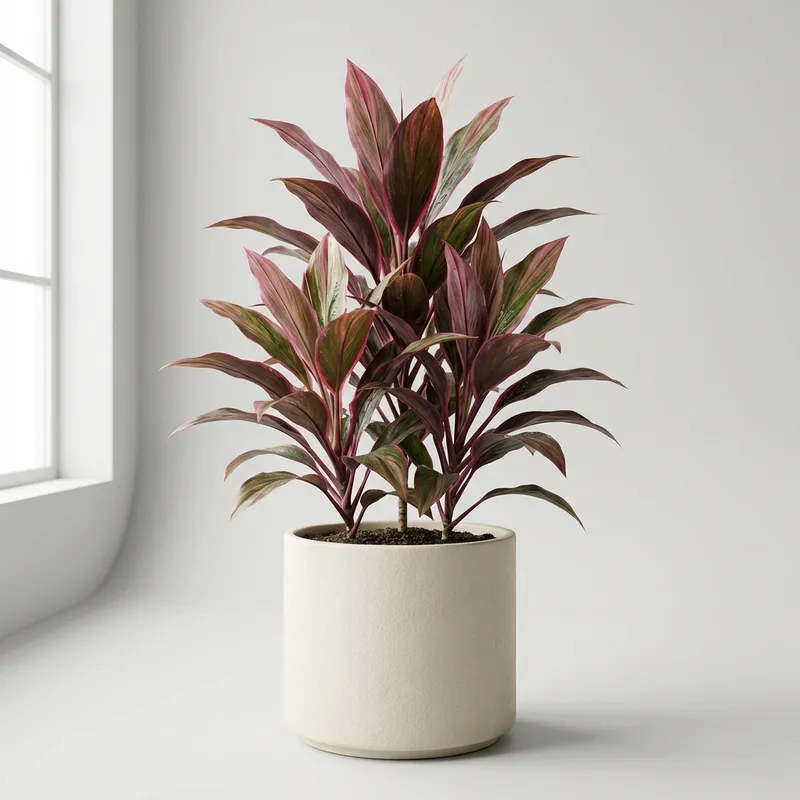
Cordyline fruticosa
An iconic tropical plant beloved for its stunning, multi-colored foliage that can range from deep burgundy to neon pink. Often associated with Polynesian culture and believed to bring good luck, it provides a bold, architectural flair to any indoor space with its sword-shaped leaves.
Light
Bright Indirect
Water
Moderate
Difficulty
Moderate
Humidity
High
Pet Warning
Contains saponins, which are toxic to both dogs and cats. Ingestion can lead to vomiting, drooling, and dilated pupils.
Care Guide
Ti Plant Care Guide
Lighting
Place your Ti Plant in bright, indirect light. While it can tolerate some morning sun, direct afternoon rays will scorch the leaves. If the light is too low, the vibrant pink and red variegation will fade to green.
Watering
Keep the soil consistently moist but not soggy. Use distilled or rainwater whenever possible, as Cordyline fruticosa is highly sensitive to fluoride and chlorine commonly found in tap water, which can cause leaf tip burn.
Humidity
Being a tropical native, this plant thrives in high humidity (above 50%). Use a humidifier or a pebble tray to maintain moisture levels, especially during winter when indoor air is dry.
Seasonal Care
- Spring/Summer: This is the peak growth phase. Ensure the plant is fed and watered regularly.
- Fall/Winter: Growth will slow significantly. Reduce watering frequency and ensure the plant is kept away from cold drafts or dry heating vents.
Common Issues
- Brown Leaf Tips: Often a sign of fluoride toxicity or low humidity.
- Spider Mites: These pests love dry conditions. Regularly wipe the leaves with a damp cloth to keep them clean and pest-free.
In-Depth Care & Growth
Feeding & Soil
Fertilizer
Balanced liquid 10-10-10 fertilizer
Soil
Well-draining, rich, peat-based potting mix with a slightly acidic pH.
Physical Attributes
Mature Size
3 to 6 feet tall indoors
Growth Rate
Moderate
Propagation
Stem cuttings (cane cuttings), tip cuttings, or air layering.