
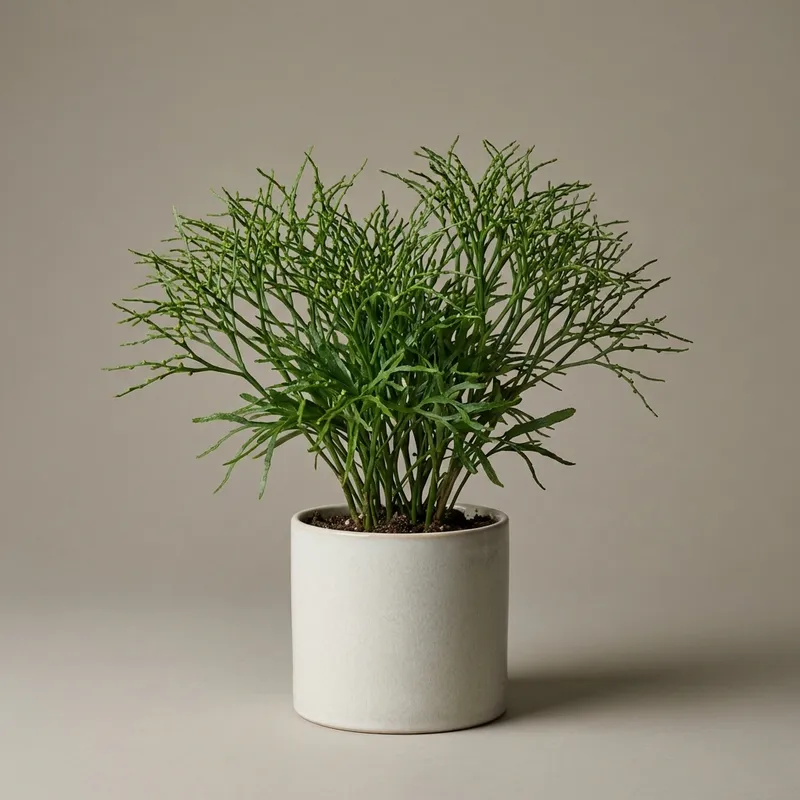
Whisk Fern
Psilotum nudum
Psilotum nudum, commonly known as the Whisk Fern, is an extraordinary 'living fossil' that provides a glimpse into the early evolution of vascular plants. Lacking true roots and leaves, this primitive plant consists of upright, dichotomously branching green stems that perform photosynthesis. Its minimalist, structural aesthetic is highlighted by small, scale-like appendages called prophylls and bright yellow, trilobed spore-bearing structures known as synangia. It is a unique botanical curiosity that thrives in environments mimicking its natural epiphytic or lithophytic habitats.
Light
Bright Indirect
Water
Moderate
Difficulty
Moderate
Humidity
High
Pet Warning
Contains psilotoxin, which can cause mild to moderate digestive distress and irritation if ingested by pets or humans.
Care Guide
Psilotum nudum Care Guide
Light
Whisk Ferns thrive in bright, indirect sunlight. While they can tolerate lower light levels, their growth will be significantly slower. Avoid direct afternoon sun, which can scorch the stems and turn them yellow or brown.
Watering
Maintain a consistent moisture level in the substrate. Water the plant once the top half-inch of the soil feels dry to the touch. It is crucial to ensure the pot has excellent drainage, as Psilotum is sensitive to waterlogged conditions which can lead to rhizome rot.
Humidity & Temperature
As a tropical and subtropical species, this plant requires high humidity (ideally above 60%). Use a humidifier, a pebble tray, or group it with other plants to maintain moisture in the air. Keep temperatures between 65°F and 85°F (18°C-29°C) and protect it from cold drafts or temperatures below 50°F.
Soil & Potting
Standard potting soil is too heavy for this plant. Use a very airy, well-draining mix similar to what you would use for orchids or epiphytic cacti. A blend of orchid bark, perlite, and a small amount of peat moss or coco coir is ideal.
Seasonal Tips
- Spring/Summer: Growth is most active now; ensure consistent watering and regular fertilization.
- Fall/Winter: Growth slows down significantly. Reduce watering frequency and cease fertilization until the following spring.
Common Issues
- Stem Dieback: Often caused by underwatering or extremely low humidity.
- Mushy Stems at Base: A sign of overwatering or poor soil aeration.
In-Depth Care & Growth
Feeding & Soil
Fertilizer
Balanced liquid fertilizer (10-10-10) diluted to half-strength
Soil
Coarse, airy mix of orchid bark, perlite, and peat moss
Physical Attributes
Mature Size
8-24 inches tall
Growth Rate
Slow
Propagation
Rhizome division or spore sowing