
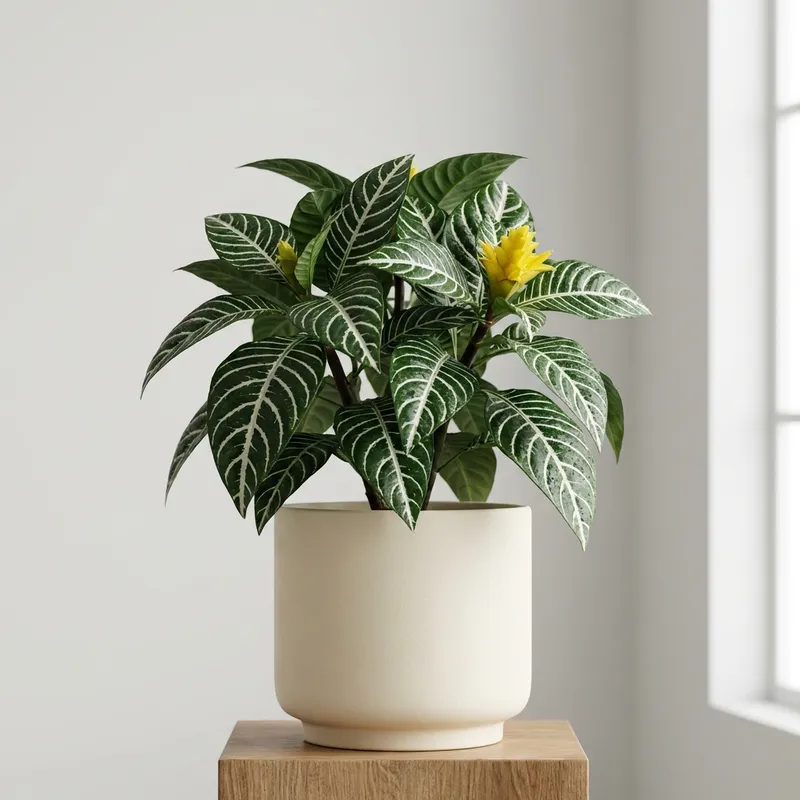
Zebra Plant
Aphelandra squarrosa
The Zebra Plant is a striking tropical evergreen shrub native to the Atlantic Forest biome of Brazil. It is most famous for its deeply veined, glossy dark green leaves that feature stark, contrasting white or silver-yellow stripes. When it reaches maturity and receives ideal care, it produces a spectacular, long-lasting cone of bright yellow bracts that bloom into small, delicate flowers, making it a prized specimen for indoor enthusiasts looking for a bold visual statement.
Light
Bright Indirect
Water
High
Difficulty
Difficult
Humidity
High
Pet Friendly
Aphelandra squarrosa is non-toxic to cats, dogs, and horses according to the ASPCA. However, ingestion of any plant material may cause mild stomach upset in sensitive animals.
Care Guide
Lighting Zebra Plants require bright, filtered light to maintain their variegation and encourage blooming. Avoid direct afternoon sun which can scorch the leaves, but ensure it is not in a dark corner, or it will become leggy and fail to flower. ### Watering Keep the soil consistently moist but never waterlogged. The Zebra Plant is known for its dramatic wilting if the soil dries out even slightly. Use lukewarm water to avoid shocking the roots. ### Humidity and Temperature Maintain high humidity levels, ideally above 60%. Use a humidifier or a pebble tray filled with water. Keep temperatures between 65°F and 80°F (18°C-27°C) and avoid any cold drafts or sudden temperature drops. ### Maintenance and Pruning Once the yellow bracts begin to turn brown, prune them back to the first pair of leaves to encourage new growth and keep the plant bushy. Clean the large leaves regularly with a damp cloth to remove dust and prevent pests like spider mites.
In-Depth Care & Growth
Feeding & Soil
Fertilizer
Balanced liquid houseplant fertilizer (10-10-10)
Soil
A rich, organic, well-draining potting mix, ideally peat-based with added perlite or sand for aeration.
Physical Attributes
Mature Size
1 to 2 feet tall and wide
Growth Rate
Moderate
Propagation
Stem cuttings taken in early spring, treated with rooting hormone, and kept in a high-humidity environment with bottom heat.